How Can a School Become More Language-Inclusive?

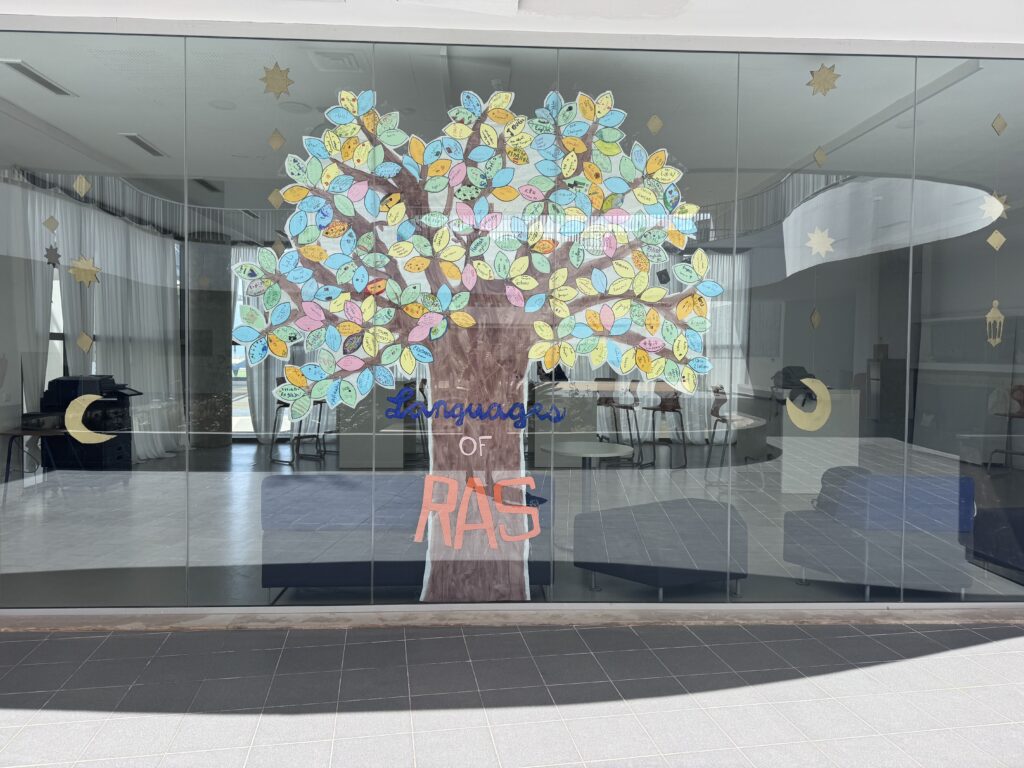
Walk into almost any international school and you’ll probably see multilingualism everywhere.
Students speaking different languages on the playground. Families communicating across languages at pickup. Teachers and staff switching between languages throughout the day.
And then the bell rings, and much of that linguistic diversity disappears when students go into their classrooms for learning.
English becomes the language of instruction, the language of assessment, the language students are expected to think through, and frequently the language through which families are expected to access the school.
That doesn’t necessarily make the school bad at supporting multilingual learners. But it does point to an important distinction:
Having multilingual students does not automatically make a school language-inclusive.
Language inclusion requires something more intentional.
It means creating a school where students’ languages are recognized not simply as something they speak at home, but as resources for learning, thinking, identity, and participation.
And that move happens at more than one level.

1. Make Students’ Languages Part of Learning
One of the easiest places to begin is in the classroom.
Language-inclusive teaching does not mean translating every worksheet into twelve languages or expecting teachers to speak all the languages their students speak.
It means creating opportunities for students to use the linguistic resources they already have.
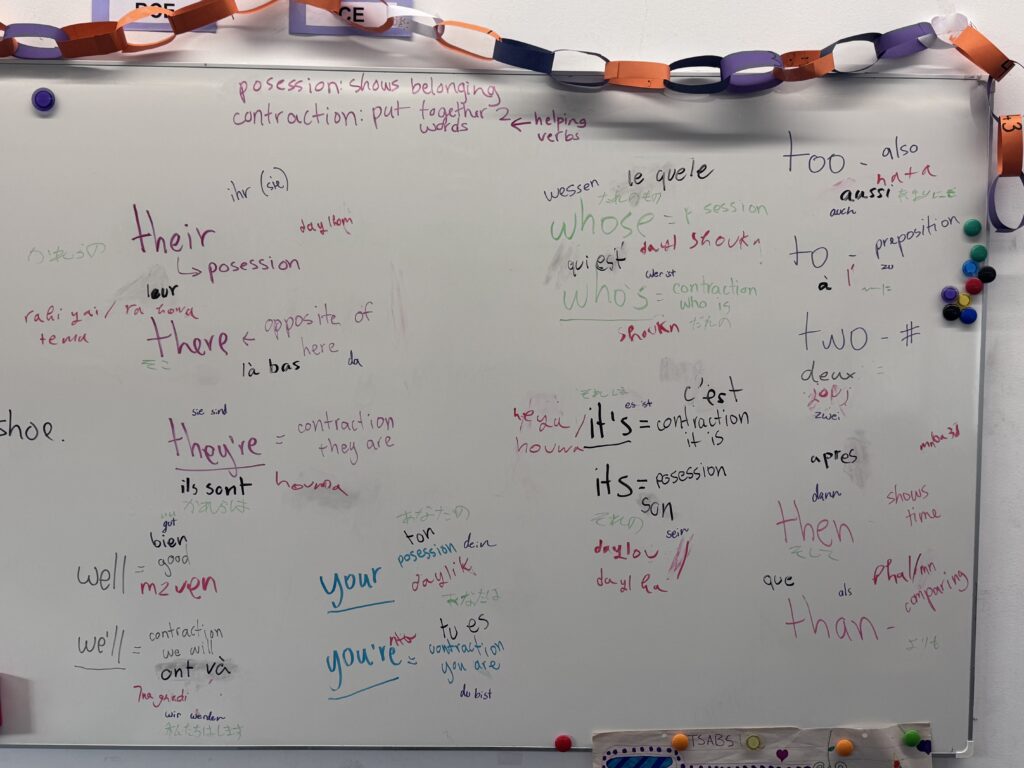
A student might discuss a difficult concept with a peer in another language before explaining it in English.
They might annotate a text using more than one language.
They might connect a new academic concept to a word, expression, experience, or cultural reference from another language they know.
A teacher introducing fractions, for example, might ask students how food, money, objects, or responsibilities are divided or shared in their families and cultures.
Those connections give students more ways into the learning.
This is one of the key ideas behind translanguaging: multilingual learners do not store their languages in completely separate compartme
nts. They draw on their full linguistic repertoire to process ideas and construct meaning.
A language-inclusive classroom creates space for that process.
Want concrete examples?
Download my free guide, What Does Translanguaging Actually Look Like?, for practical examples of how multilingual students can use their languages to support learning — without creating extra translation work for teachers.
Download the free guide here.
2. Look Beyond Individual Classroom Strategies
This is where language inclusion becomes a school-wide issue.
A teacher can create an incredibly multilingual classroom while still working inside systems that send a very different message.
Consider questions like:
- Are students discouraged from speaking their home languages outside language classes?
- Does the school have an explicit English-only policy?
- Are students’ academic abilities sometimes confused with their English proficiency?
- Can students use another language while planning, researching, or processing difficult ideas?
- Do assessments always require students to demonstrate understanding through the same linguistic route?
- Do teachers know which languages their students speak and how confidently they use them?
These aren’t simply questions about EAL support.
They’re questions about the thinking tools we make available to multilingual students.
A student with advanced English may still understand a concept differently through another language. A multilingual student may have vocabulary, cultural knowledge, conceptual associations, or ways of organizing an idea that do not map neatly onto English.
If we restrict them to one language, we may be restricting the tools they habitually use to think.
When schools recognize that, multilingualism becomes part of teaching and learning rather than a support provided only when a student struggles with English.
3. Examine the School’s Language Policy
Sometimes the biggest barriers to language inclusion aren’t happening inside lessons at all.
They are built into expectations.
A school language policy might say that it values multilingualism while simultaneously restricting when students can actually use their languages.
That creates an interesting contradiction.
If multilingualism is something the school genuinely values, students should be able to experience that value in everyday school life.
A strong language policy should therefore do more than identify the school’s language of instruction.
It should help the community think about questions such as:
When can different languages support learning?
How should teachers respond when students use languages they do not understand?
How can schools distinguish language development from academic understanding?
How do we make students’ languages visible without turning them into decoration?
The goal is not to remove the shared language of instruction.
It’s to stop treating that language as the only legitimate pathway to thinking and learning.
4. Include Families Before You Need Something From Them
Family language inclusion is frequently discussed in terms of translation.
And translation absolutely matters.
Families need access to important information, school policies, meetings, and decisions.
But genuine family engagement goes further.
Multilingual families also bring knowledge into the school.
They understand linguistic practices, cultural expectations, communication norms, traditions, histories, and perspectives that teachers may not know.
Language-inclusive schools create ways for that knowledge to move into the school rather than only translating information that moves out of it.
That might mean inviting families to contribute examples to a unit, share linguistic knowledge, help teachers understand how particular concepts appear across languages, or participate in classroom learning in ways that position them as experts.
The question changes from:
“How can we help this family understand our school?”
to:
“What does this family know that could help us understand our students?”
That is a very different relationship.
5. Build Teacher Capacity
None of this requires teachers to become linguists.
But teachers do need a shared understanding of how multilingualism interacts with learning.
Without that understanding, even well-intentioned educators can make assumptions such as: “This student already speaks excellent English, so their other language isn’t relevant here.”
Or: “I can’t allow students to discuss this in a language I don’t understand because I won’t know whether they are on task.”
Or: “Translanguaging means I need to translate all of my materials.”
Professional learning can help teachers move beyond those assumptions and recognize what language inclusion can actually look like in everyday teaching.
And importantly, teachers need practical examples.
Language-inclusive practice becomes much easier when educators can see where small changes to an existing lesson can give students another route into understanding.
Language Inclusion Is a School Mindset
A school doesn’t become language-inclusive because it adds multilingual signs to the hallway. It doesn’t happen because the website can be translated into five languages. And it doesn’t require rebuilding every lesson from scratch.
It begins when a school stops seeing students’ languages primarily as something that needs to be managed and starts recognizing them as resources that already exist within the community.
Then the questions become more interesting: where could another language help a student think? What knowledge might be hidden because we are only asking for it in one language? Whose linguistic expertise exists in this community but is currently going unused?
And: What would change if multilingualism were not something happening around the edges of school life, but something intentionally built into learning itself?
That is where language inclusion begins.
Working on language inclusion across your school?
I also work with international schools on professional learning, language policy, and school-wide multilingual practice.


Responses