What Professional Development Do Teachers of Multilingual Learners Need?

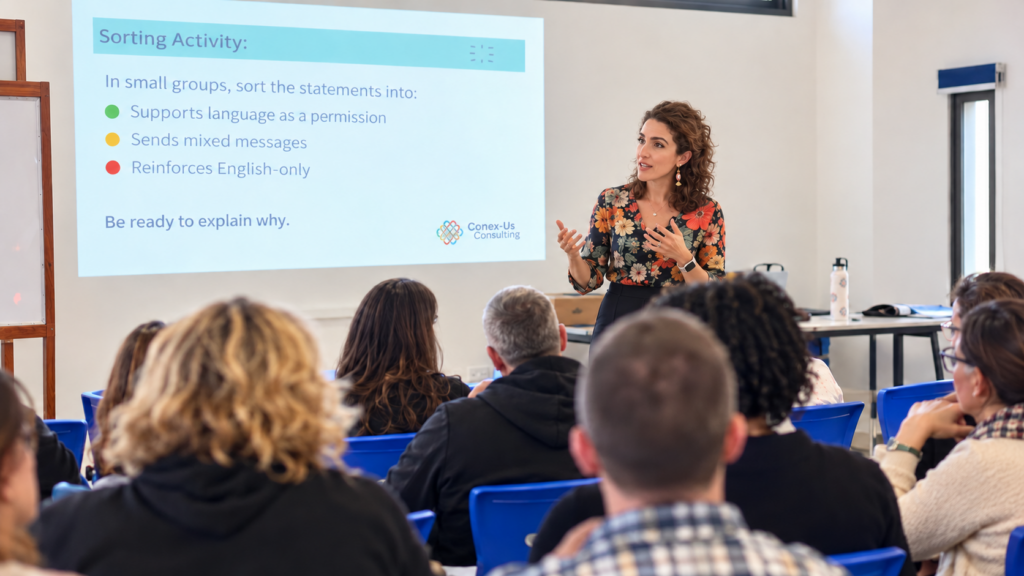
Two teachers. Same school. Same multilingual student population. Completely different approaches to language.
In one classroom, students use their home languages to explore ideas, connect prior knowledge, and demonstrate understanding.
In another, students are expected to work exclusively in English, even when another language could help them learn.
Both teachers care about their students. Both have attended professional development on differentiation and inclusive teaching. Both believe they’re doing what’s best for multilingual learners.
So why are their approaches so different?
Because professional development on inclusion doesn’t automatically create a shared understanding of multilingual learning.
And that’s a challenge school leaders need to address.
When schools invest in professional development for teachers of multilingual learners, the goal shouldn’t simply be to introduce new strategies. It should be to develop the understanding, confidence, and shared expectations that make language-inclusive instruction part of everyday practice.
So what should effective professional development actually include?
1. Start with how multilingual students learn
Professional development for multilingual learners often focuses on classroom strategies.
Teachers learn about visual scaffolds, vocabulary support, sentence frames, and differentiated assessments. These can be valuable tools.
But before teachers decide how to support multilingual learners, they need to understand how multilingual learning works.
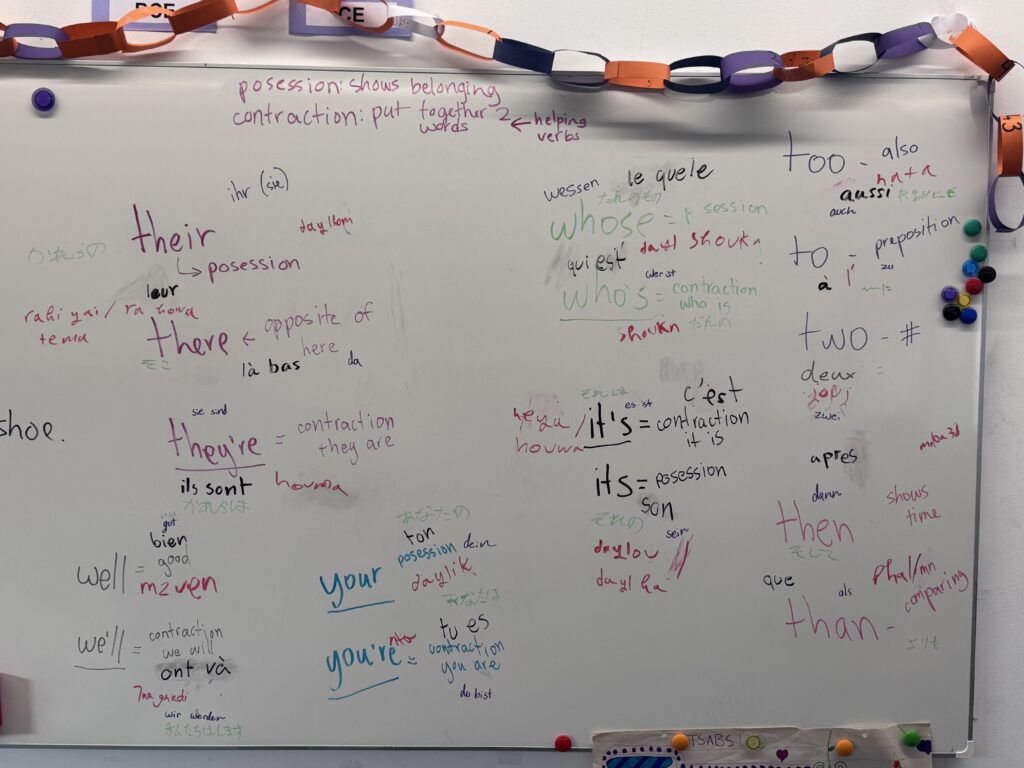
For example, a student who explains a scientific concept in Arabic before writing about it in English isn’t necessarily avoiding English. They may be using linguistic knowledge they already possess to process new information.
Similarly, a student who makes connections between words in Spanish and English isn’t confusing two languages. They’re identifying relationships that can support learning.
When teachers understand how knowledge and linguistic resources interact, they can make more informed instructional decisions.
This is where translanguaging becomes especially valuable.
Translanguaging recognizes that multilingual students can draw on their full linguistic repertoires to make meaning, learn, and communicate. As a pedagogical approach, it helps teachers design opportunities for students to use those resources purposefully.
Professional development should help teachers understand the principles behind such practices, rather than simply introducing another collection of activities.
For examples of how this understanding translates into classroom decisions, explore these practical translanguaging strategies.
2. Is UDL professional development enough for multilingual learners?
Many schools have already invested in Universal Design for Learning (UDL), differentiated instruction, or Multi-Tiered Systems of Support (MTSS).
These approaches can make important contributions to multilingual inclusion. But they aren’t interchangeable with translanguaging.
UDL focuses on designing learning environments that anticipate learner variability and reduce barriers to access and participation.
MTSS provides a framework for organizing instruction and adjusting support according to students’ needs.
Translanguaging brings a specific understanding of multilingual language practices into instructional design.
There is considerable overlap.
In fact, CAST’s UDL Guidelines 3.0 explicitly emphasize linguistic diversity, multiple ways of making meaning, and respect across languages and dialects.
A skilled UDL consultant may absolutely incorporate translanguaging principles into their work.
But including multilingual learners in general inclusion training isn’t necessarily the same as developing teachers’ capacity in multilingual pedagogy.
Consider a teacher who has learned to provide multiple means of representation.
They might offer diagrams, videos, and written explanations to make a concept more accessible.
Excellent.
But do they recognize a student’s home language as a resource for constructing understanding?
Do they know how to design opportunities for cross-linguistic transfer?
Do they understand how classroom language expectations can influence participation and belonging?
Those questions require explicit attention to multilingualism and multiculturalism.
The goal isn’t to replace UDL or MTSS with translanguaging. It’s to ensure that a school’s existing approaches to inclusion are informed by an understanding of multilingual learners.
3. Professional development must include school leadership
Teachers don’t make instructional decisions in isolation.
They work within systems shaped by curriculum expectations, assessment practices, school policies, and leadership priorities.
Imagine a teacher attending a translanguaging workshop and discovering new ways to help students draw on their linguistic resources.
They’re excited to try these approaches.
But their school’s language policy emphasizes English-only instruction. Their department expects all student discussions to take place in English. Their assessment practices leave little room for multilingual meaning-making.
What happens next?
The teacher may try a few activities, but sustaining those practices becomes difficult when the surrounding expectations haven’t changed.
Even if that teacher successfully implements translanguaging practice, they might be operating as an island as the students go to the next class, and have a totally different experience.
This is why school leaders need to participate in professional learning about multilingualism, too.
They need a shared understanding of what effective multilingual practice looks like, why it’s important, and how it connects to the school’s wider educational goals.
They also need opportunities to examine whether existing policies and expectations support the practices teachers are being encouraged to develop.
School-wide language inclusion cannot depend entirely on individual teachers making individual decisions.
It requires leadership that creates the conditions for consistent, thoughtful practice.
This is part of a broader challenge: becoming a language-inclusive school requires attention to classroom practice, school policies, leadership, and the wider community.
4. Move from individual strategies to shared instructional practice
One of the biggest challenges facing multilingual schools is inconsistency.
A student might encounter a classroom where their languages are actively welcomed, followed by another where those same languages are discouraged.
The difference may have little to do with teachers’ intentions.
Instead, teachers may have different beliefs about language acquisition, different levels of experience, or different understandings of their responsibility for multilingual learners.
Here’s the thing: language acquisition is not an exact science, but it does have research-backed best practices that need to be clearly communicated.
Effective professional development should help schools establish shared principles without requiring every teacher to use identical strategies.
This means asking questions such as:
- What do we understand about the relationship between language and learning?
- How should those beliefs influence everyday instructional decisions?
- What expectations should remain consistent across classrooms?
The goal is not to prescribe one method for every teacher.
It’s to develop a common foundation that informs decisions across different subjects, grade levels, and learning contexts.
And importantly, responsibility for multilingual inclusion belongs to the entire teaching community, not exclusively to EAL or language-support specialists.
If your teachers are beginning to explore translanguaging, our free translanguaging starter kit offers an accessible way to start examining what language-inclusive practice can look like.
5. Professional development shouldn’t end when the workshop does
A workshop can introduce new ideas, challenge assumptions, and give teachers opportunities to explore instructional approaches.
But understanding an idea during professional development isn’t the same as consistently applying it in a classroom.
Teachers need opportunities to experiment, reflect, and revisit their learning.
School leaders also need ways to identify what’s working, where teachers need additional support, and whether school expectations are helping or hindering implementation.
That might mean collaborative planning, instructional coaching, classroom reflection, or follow-up professional learning sessions.
The most appropriate approach depends on the school’s context and existing structures.
What’s important is treating professional development as part of an ongoing improvement process rather than an isolated event.
What should school leaders look for when choosing professional development?
Before investing in professional development for multilingual learners, school leaders should consider three questions.
Does it develop understanding as well as strategies?
Teachers should leave with more than activities to try. They should understand why those practices are appropriate and how to adapt them to different learners and contexts.
Does it address the whole school?
Professional learning should consider the relationships between classroom practice, leadership expectations, and school systems.
Does it include a plan for implementation?
Schools should have opportunities to connect new learning to their existing priorities and revisit how practice is developing.
When these elements work together, professional development can become a foundation for more coherent, inclusive instruction.
From Valuing Multilingualism to Designing for It
Most schools serving multilingual communities recognize the importance of language inclusion.
But recognizing multilingualism as an asset and designing instruction around it are two different things.
Teachers need to understand how multilingual students learn, why their existing languages are valuable resources, and what that means for everyday instructional decisions.
School leaders need to establish shared expectations and create the conditions for those practices to become consistent across classrooms.
And professional development should help connect the two.
The question isn’t only whether your school values multilingualism. It’s whether your professional development equips teachers to design for it.
Ready to strengthen multilingual practice across your school?
At Conex-Us Consulting, we work with schools to move from recognizing multilingualism as an asset to intentionally designing for it.
Through tailored professional development, leadership support, and school-wide consulting, we help educators connect research on multilingual learning with the decisions they make in classrooms and across their schools.
Whether your staff are just beginning to explore translanguaging or your school is working toward a more consistent approach to language inclusion, we can start with your existing priorities and challenges.
Explore whole-school professional learning and consulting
I’d love to hear what your school is working toward.

Responses