Common Myths About Translanguaging in International Schools

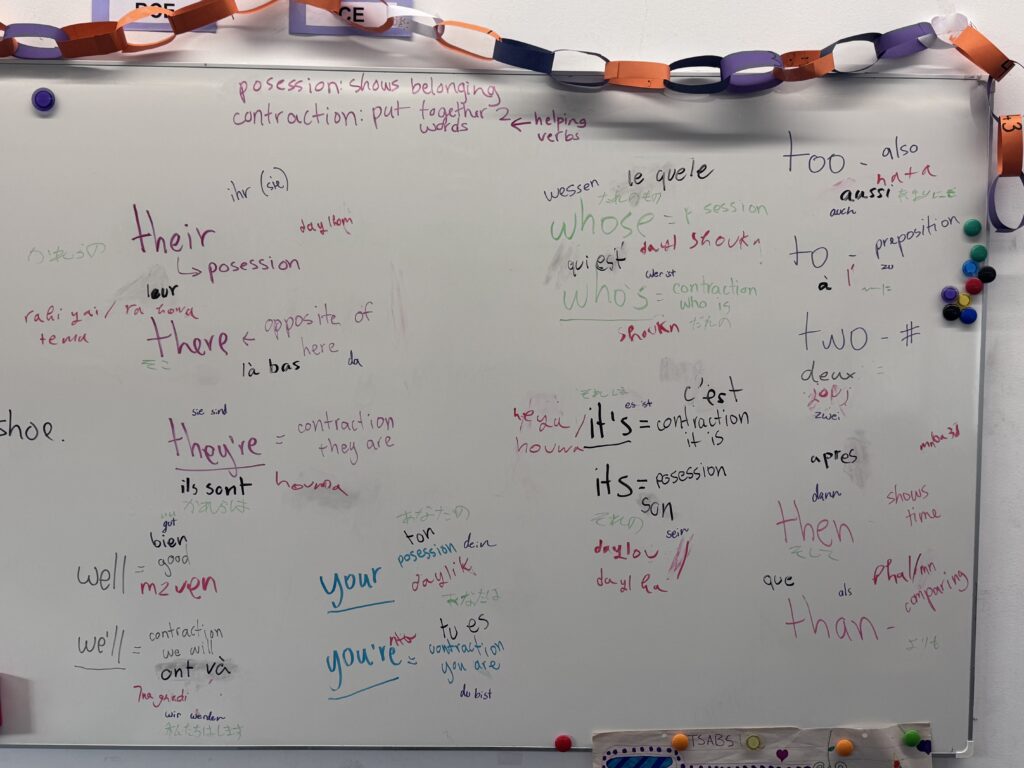
International schools are multilingual places.
Obviously.
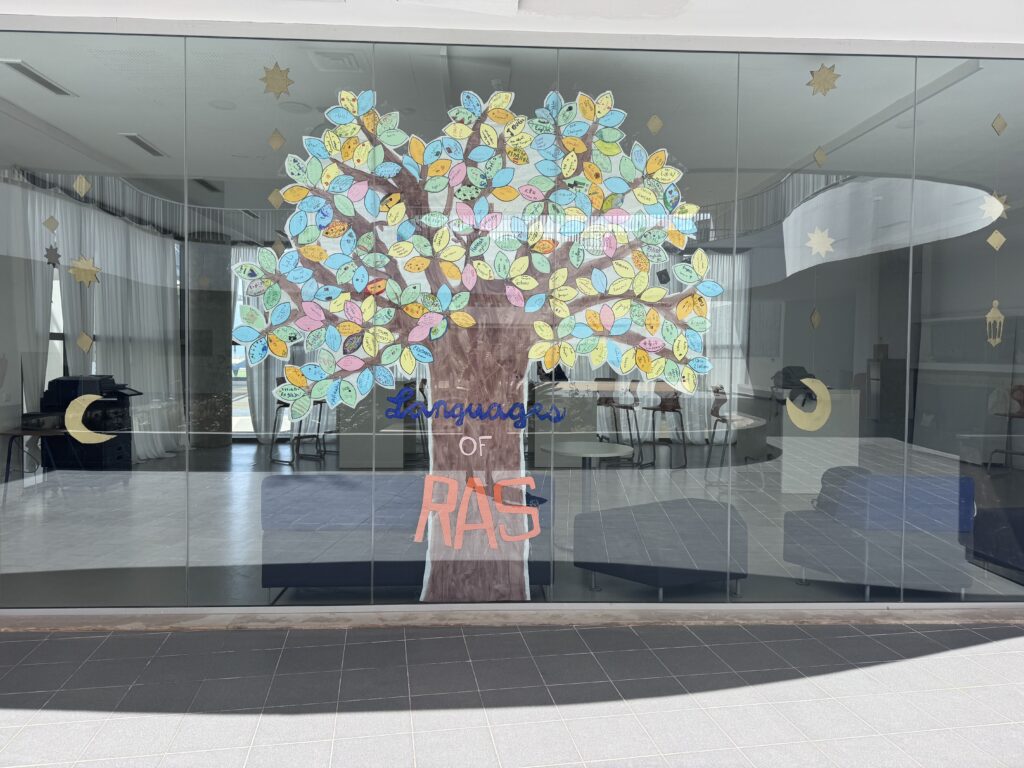
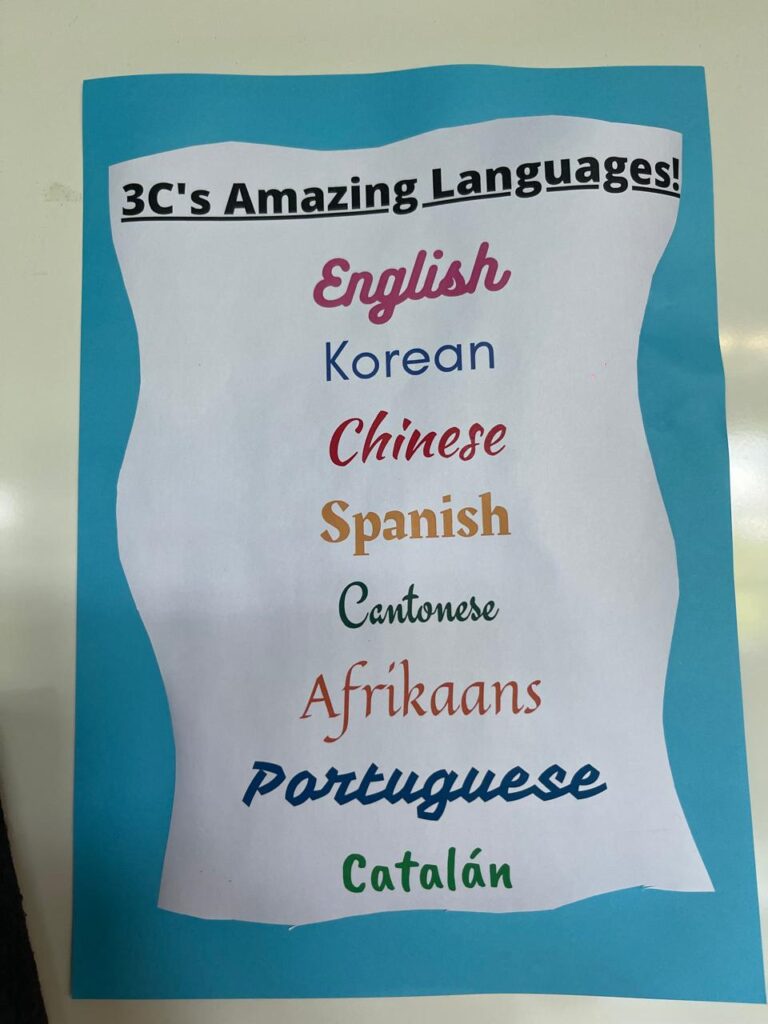
Walk through the hallway of almost any international school, and you’ll hear students switching between languages with friends. They go home and speak another language with their families. They Google something in one language, think about it in another, and explain it to a friend in a third.
And then they walk into class, where, somehow, we sometimes expect all of that linguistic complexity to disappear.
That’s one reason translanguaging has become such an important conversation in international education. It also explains why teachers have so many questions about it.
And they are good questions.
- Do I need to speak my students’ languages?
- Am I supposed to let everyone speak whatever language they want all the time?
- Will this slow down their English development?
- And, please tell me honestly: is this going to create more work for me?
Most hesitation I hear from teachers isn’t resistance to multilingualism. Teachers generally want their students to succeed.
They just want to know what this actually looks like on Tuesday morning during Period 3.
So let’s clear up a few things.

Myth 1: I Need to Speak My Students’ Languages
This is probably the first question I hear.
And thankfully, no. You do not need to learn twelve languages before you can start using translanguaging.
Translanguaging isn’t about the teacher becoming the linguistic expert in every language represented in the classroom. It is about recognizing that your students already possess linguistic resources that can help them learn.
Your job is still to teach: YOU establish the learning goal. YOU design the task. YOU listen to students’ reasoning. YOU decide what evidence of learning you need. But you don’t have to understand every word students say to recognize that meaningful learning is happening.
Imagine you have two students who both speak Korean. You’ve just introduced a complicated science concept and you can tell they’re almost there.
You might simply say: “Take two minutes. Talk this out with each other in whichever language helps you think best. Then come back and tell me what you’ve figured out.”
You don’t speak Korean. You don’t need to. You have simply created a structure that allows your students to use Korean to strengthen their understanding of science.
That’s a very different role from policing which language they are allowed to think in.
Myth 2: Translanguaging Is Complicated Academic Theory
Well… it is it is grounded in academic theory.
There is a substantial and fascinating body of research behind translanguaging, but that doesn’t mean classroom implementation has to be complicated. In fact, many teachers discover that they have already been using elements of translanguaging without necessarily calling it that.
Maybe you’ve allowed two students to clarify directions together in Mandarin. Maybe a student has Googled an unfamiliar concept in Arabic before discussing it in English. Maybe you’ve encouraged students to annotate a text using words from their home language. Maybe you’ve asked a student, “What is this called in French?”
Those moments are important. The difference between incidental language use and strong translanguaging practice is intentionality.
Take something as simple as language buddies. After introducing a new concept, you deliberately give students who share a language two minutes to process it together.
Then everyone returns to the learning task.
That’s it.
Nobody has abandoned English instruction or rewritten the curriculum. Nobody has released linguistic anarchy into Grade 7 mathematics. You’ve simply recognized something we already know about learning:
Students think better when they understand what they’re thinking about.
Translanguaging gives them more tools with which to do that thinking.
Myth 3: Translanguaging Means More Work
Teachers have enough initiatives — seriously. If translanguaging required teachers to create every worksheet in six languages, I wouldn’t recommend it either.
Fortunately, it doesn’t.
The goal is not to create parallel curricula for every language in your classroom. Often, it is simply a matter of changing the options students have while working toward the same learning objective.
Consider a research project. Instead of saying: “All of your sources must be in English,”
you might say: “Your final presentation will be in English. Your research can come from any credible source you can understand.”
You haven’t created anything, but you may have dramatically expanded the quality of information your multilingual students can access. The same is true of classroom discussion, planning, annotation, vocabulary work, peer collaboration, and background reading. And here’s where translanguaging can actually make teaching easier.
If a student doesn’t understand a concept because the language of instruction is getting in the way, the teacher often ends up explaining it again.
And again.
And again.
But… giving students another route to understanding early can prevent a lot of that reteaching later. Sometimes language inclusion isn’t another thing on the teacher’s plate. Sometimes… it clears space on the plate.
Myth 4: Using Home Languages Will Hurt Students’ English
This concern makes intuitive sense, and it’s, unfortunately, the most common one I hear.
If students need more English, shouldn’t they spend as much time as possible using English?
But… language development doesn’t happen in isolation from thinking.
Suppose a G7 student is researching climate change. In English, they can currently understand sources written at approximately a Grade 4 level. In Spanish, they can understand material written for their actual age.
If we insist that every part of the learning process happen in English, we haven’t simply increased their exposure to English. We may also have reduced the complexity of the ideas they’re allowed to encounter.
Instead, the student might research climate change in Spanish, build strong background knowledge, organize their thinking, and then present what they have learned in English. Now, English has a purpose. The student has ideas worth communicating. And because those ideas already exist, they can focus cognitive energy on finding the English language needed to express them.
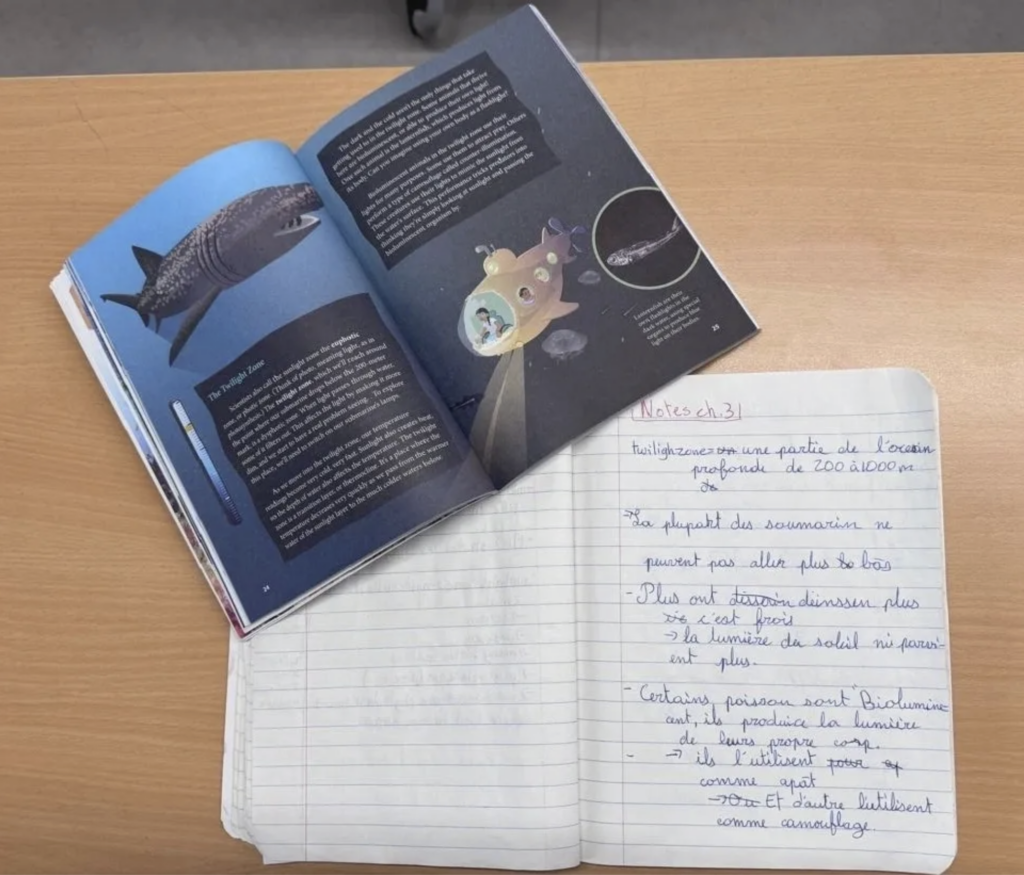
The same thing happens with reading. A student might read a complex text in a familiar language and then discuss themes, make inferences, compare perspectives, or write an analysis in English. That movement between languages is not a failure to learn English.
That movement is part of the learning.
Students begin making connections:
- Ohh… that’s what we call this in English.
- This word works differently from in my home language.
- We don’t phrase that idea the same way.
- I know this concept. I just didn’t know this word.
And that is where some very interesting language learning starts to happen.
Myth 5: If We Use Translanguaging, We Have to Use It Everywhere
Nope.
There is no Translanguaging Police.
You don’t have to redesign your entire school on Monday.
In fact, I would much rather see a teacher thoughtfully use one translanguaging routine than attend a workshop, collect fifteen strategies, and attempt all of them simultaneously the next morning. That’s a lot of work for BOTH the teacher, AND their students who are used to one specific mode.
Start somewhere useful.
Maybe students can discuss a new concept in a shared language before writing, or multilingual research sources become acceptable. Maybe students compare vocabulary across languages. Maybe you start asking:
“Does anyone know another way to think about this idea?”
Then notice what happens. Did students explain their thinking more clearly? Did someone participate who normally doesn’t? Did a student make a connection you hadn’t anticipated? Did the quality of the final work improve?
Then… you adjust.
Because good translanguaging practice isn’t really about accumulating strategies.
It is about learning to recognize when language is helping students learn, and when language itself has become the barrier.
That takes practice. And it looks different in a Grade 2 classroom, an IB Biology lesson, a secondary history seminar, and a French language class.
That’s precisely why translanguaging can’t be reduced to a checklist.
Moving Beyond the Myths
Translanguaging isn’t about letting students “speak whatever language they want.”
It isn’t about abandoning the language of instruction, lowering academic expectations, and it definitely isn’t about teachers frantically translating PowerPoints into every language represented in the room (please don’t do this. It is tedious. There are better ways).
It is about something much more fundamental: What linguistic resources does this student already have, and how can those resources help them think, learn, and communicate more powerfully?
Once teachers begin asking that question, classrooms start to look different.
Not because English disappears, but because multilingualism stops being treated as something nifty that students do in their free time.
And for me, that’s where the really interesting work begins.
Language inclusion shouldn’t be a side dish in an international school.
It should be part of the main course.
If you’re ready to strengthen language inclusion across your multilingual school, explore my professional learning and consulting options for schools.

Responses