
What Is Translanguaging? A Plain-Language Definition for Teachers

A science teacher hands out a worksheet on how plants take in water. In one corner, two students lean toward each other. One of them explains the idea in Arabic, points to the diagram, then switches to English to write the answer. Nobody has asked for translation. The students are using every language they have […]
If Translanguaging Is Common Sense, Why Isn’t It Common Practice?

Why what we know about multilingual learning doesn’t always make it into mainstream classrooms. TL;DR: Many strategies associated with translanguaging have been used for decades, yet remain unfamiliar to mainstream teachers. Bridging the gap requires collaboration between language specialists and subject teachers, shared goals, and school-wide support. A classroom full of multilingual learners Last year, […]
Does Translanguaging Belong in Dual-Language Programs?

Why developing proficiency in two languages doesn’t have to mean keeping them apart. Dual-language programs are designed to do something that many mainstream classrooms still struggle to accomplish: recognize bilingualism as an educational goal rather than an obstacle to overcome. Students learn academic content through two languages. They develop literacy, build relationships across linguistic communities, […]
Translanguaging vs. Code-Switching: What’s the Difference?
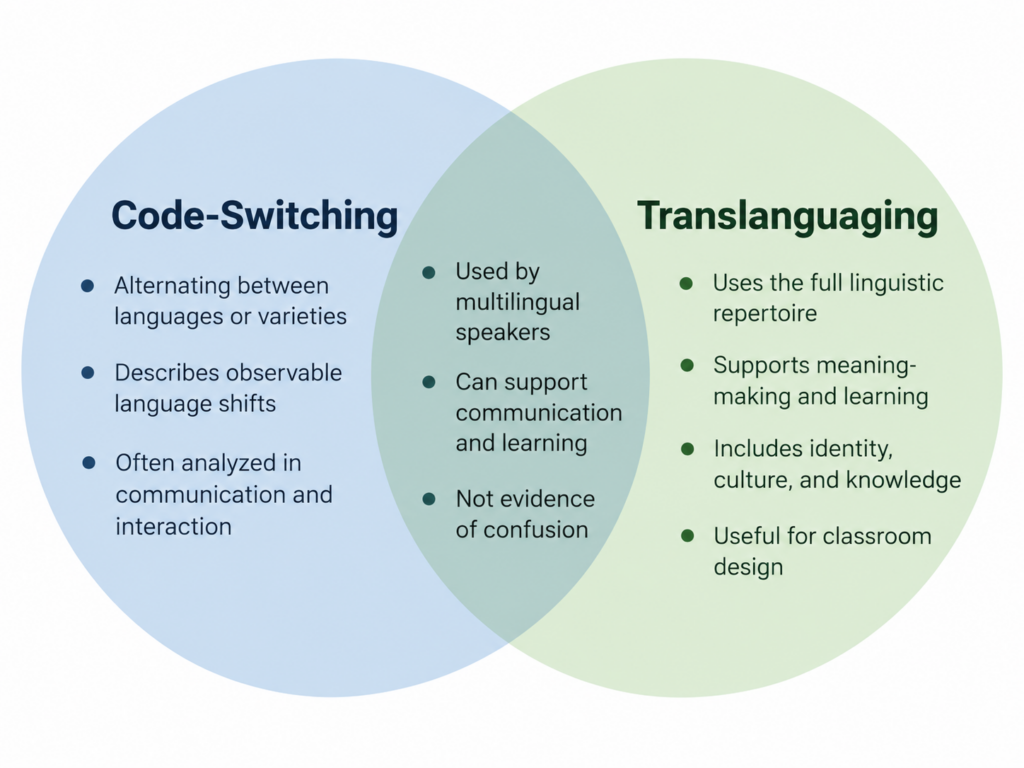
Translanguaging and code-switching are related, but they are not exactly the same. Code-switching usually refers to the way multilingual speakers alternate between languages or language varieties in conversation or communication. Translanguaging is a broader concept that looks at how multilingual people draw on their full linguistic repertoires to make meaning, learn, and express themselves. The […]
Does Translanguaging Slow Down English Development?

Rethinking English exposure, multilingual learning, and what success should look like Questions about translanguaging and English development often begin with a simple concern: if students use their other languages, are they getting enough English?If students use their other languages in school, won’t they get less English practice?… And if they get less English practice, won’t […]
Translanguaging vs. Translation: What’s the Difference?
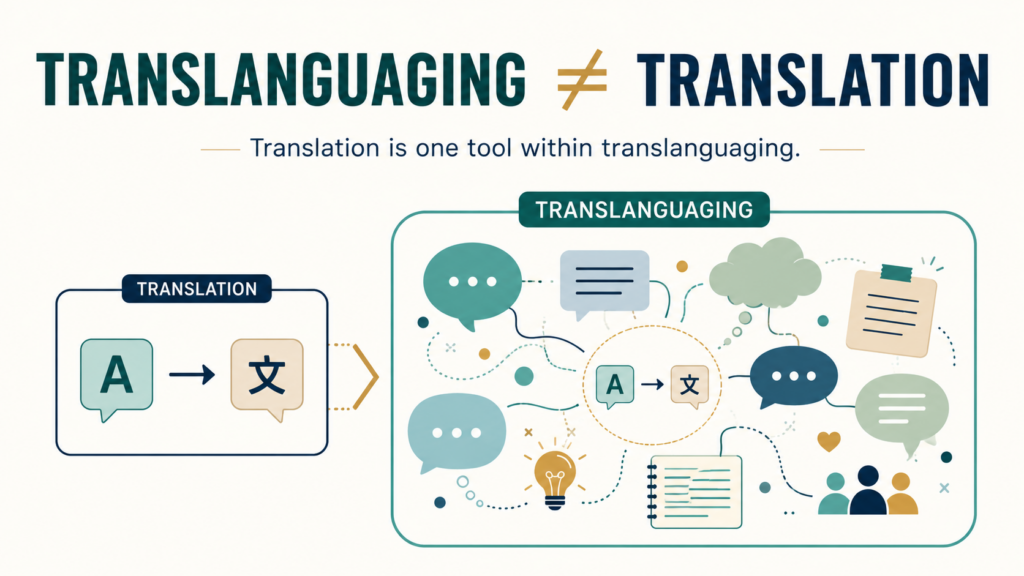
One of the most common misunderstandings I hear about translanguaging is that it basically means translation. Let students translate the worksheet. Let them look up unfamiliar words. Put the directions into several languages. And yes! Translation can be part of translanguaging. But translanguaging is much bigger than translation. The distinction is important, because simply translating more things […]
Common Myths About Translanguaging in International Schools
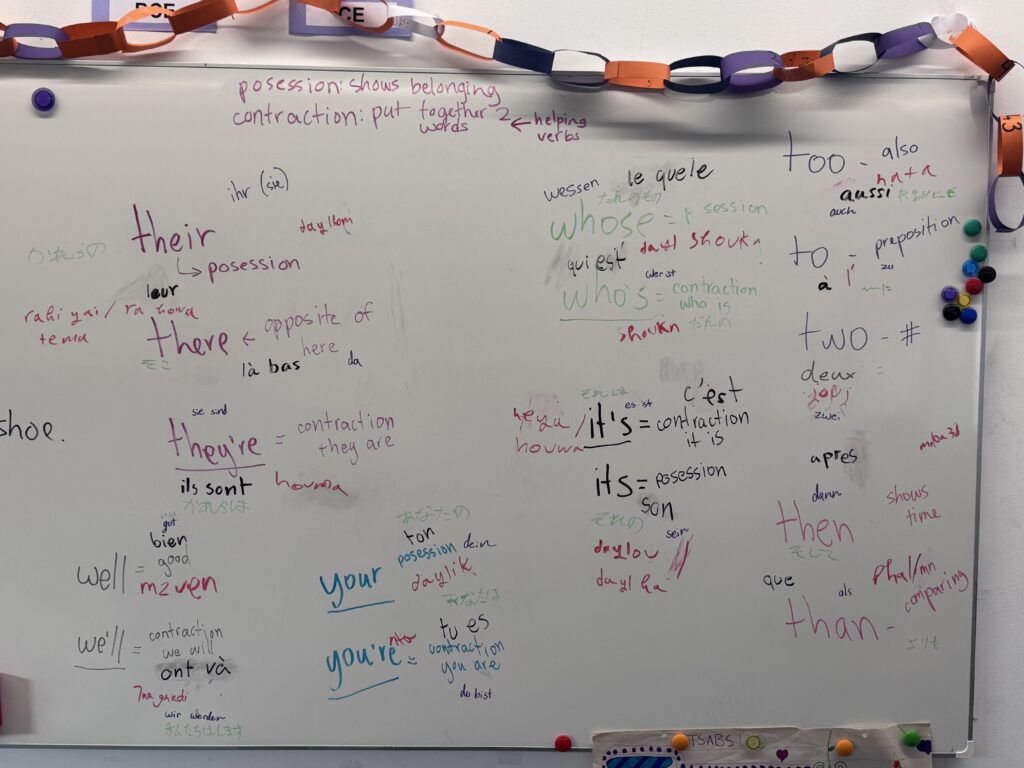
International schools are multilingual places. Obviously. Walk through the hallway of almost any international school, and you’ll hear students switching between languages with friends. They go home and speak another language with their families. They Google something in one language, think about it in another, and explain it to a friend in a third. And […]