
What Is Translanguaging? A Plain-Language Definition for Teachers

A science teacher hands out a worksheet on how plants take in water. In one corner, two students lean toward each other. One of them explains the idea in Arabic, points to the diagram, then switches to English to write the answer. Nobody has asked for translation. The students are using every language they have […]
English-Only Rules at School: Why Language Inclusion Is a Leadership Decision

When I was teaching fifth grade, I had a group of French-speaking students who were quite fluent in English. When they were chatting with each other on the playground, I encouraged them to use French. Another teacher in my division told them they had to speak English. Same school. Same grade level. Same students. Two […]
If Translanguaging Is Common Sense, Why Isn’t It Common Practice?

Why what we know about multilingual learning doesn’t always make it into mainstream classrooms. TL;DR: Many strategies associated with translanguaging have been used for decades, yet remain unfamiliar to mainstream teachers. Bridging the gap requires collaboration between language specialists and subject teachers, shared goals, and school-wide support. A classroom full of multilingual learners Last year, […]
Your Students Love Multilingualism. So Why Do They Still Want English-Only Classrooms?

Schools love celebrating diversity. We display flags from around the world, organize international days, invite families to share their traditions, and proudly describe our communities as multicultural and multilingual. But what happens when we ask students whether those languages should actually be used for learning? A few years ago, I asked 71 Grade 4 students […]
Does Translanguaging Belong in Dual-Language Programs?

Why developing proficiency in two languages doesn’t have to mean keeping them apart. Dual-language programs are designed to do something that many mainstream classrooms still struggle to accomplish: recognize bilingualism as an educational goal rather than an obstacle to overcome. Students learn academic content through two languages. They develop literacy, build relationships across linguistic communities, […]
What Professional Development Do Teachers of Multilingual Learners Need?
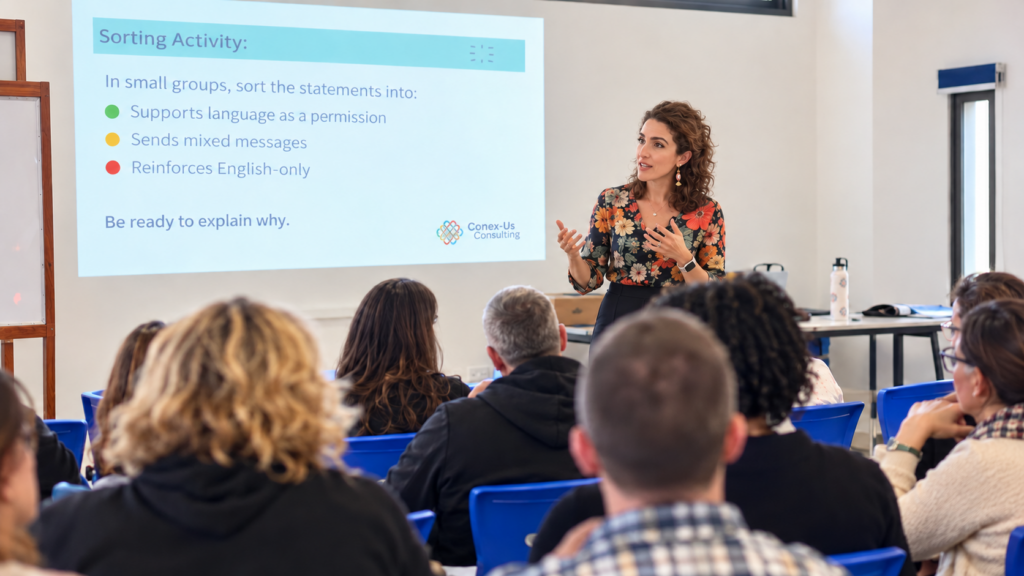
Two teachers. Same school. Same multilingual student population. Completely different approaches to language. In one classroom, students use their home languages to explore ideas, connect prior knowledge, and demonstrate understanding. In another, students are expected to work exclusively in English, even when another language could help them learn. Both teachers care about their students. Both […]
What Does a Language-Inclusive Classroom Actually Look Like?

Imagine walking into a classroom of 24 students. There are six languages represented in the room. The teacher speaks English, and perhaps a little French. Most of the instructional materials are in English, and English is the primary language of instruction. So what would make this a language-inclusive classroom? Would we expect to see welcome […]
Translanguaging vs. Code-Switching: What’s the Difference?
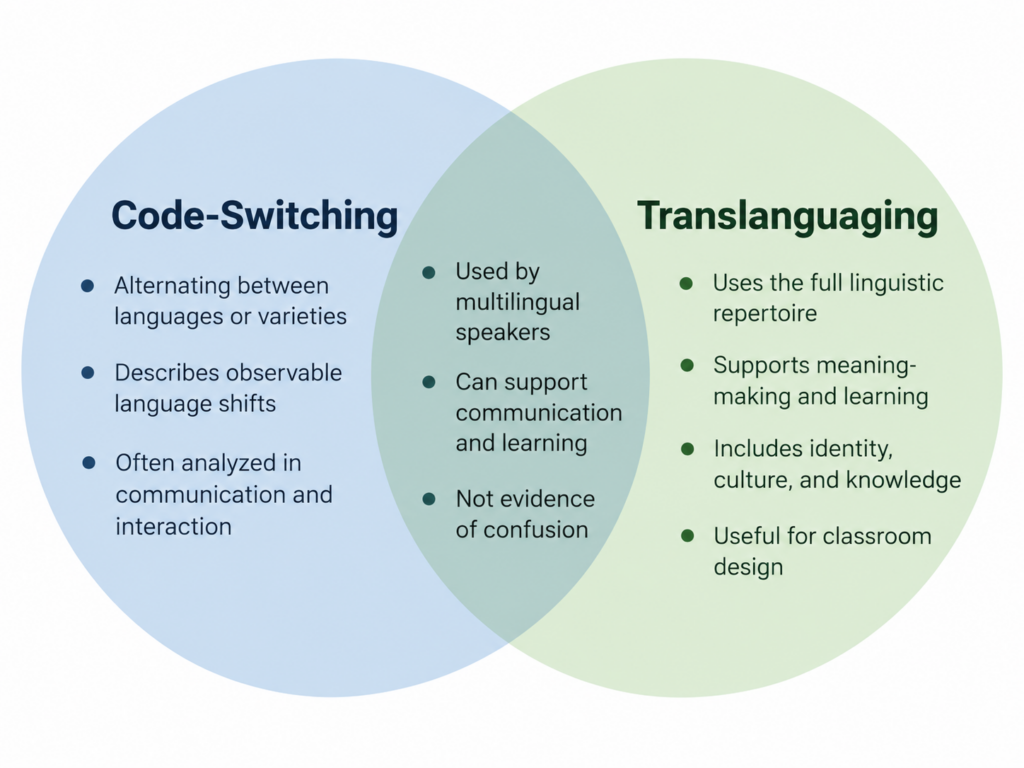
Translanguaging and code-switching are related, but they are not exactly the same. Code-switching usually refers to the way multilingual speakers alternate between languages or language varieties in conversation or communication. Translanguaging is a broader concept that looks at how multilingual people draw on their full linguistic repertoires to make meaning, learn, and express themselves. The […]
Why Multilingual Learners Aren’t Just the EAL Department’s Responsibility
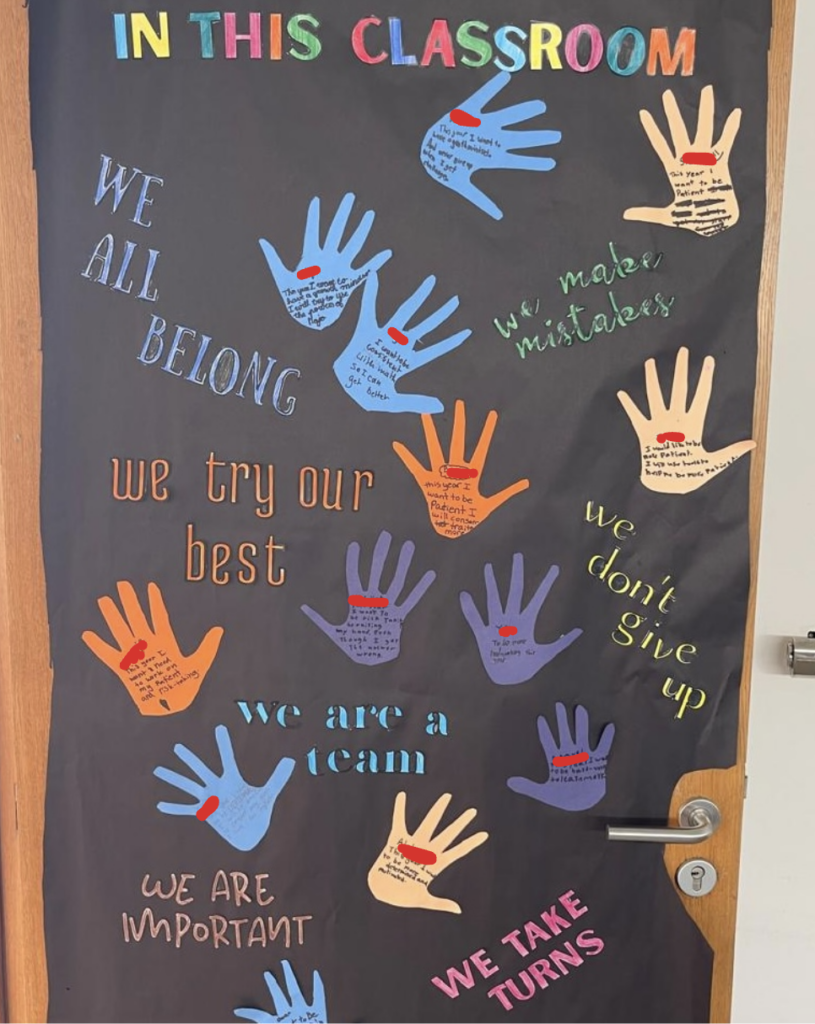
Why multilingual learners become the EAL team’s responsibility A multilingual learner is struggling with a science text. The classroom teacher notices. Someone says: “Can EAL help them?” It is a perfectly reasonable question. But when that becomes the default response every time a multilingual learner encounters difficulty, something important can happen: Responsibility for the student […]
UDL for Multilingual Learners: Linguistic Variability Is Learner Variability
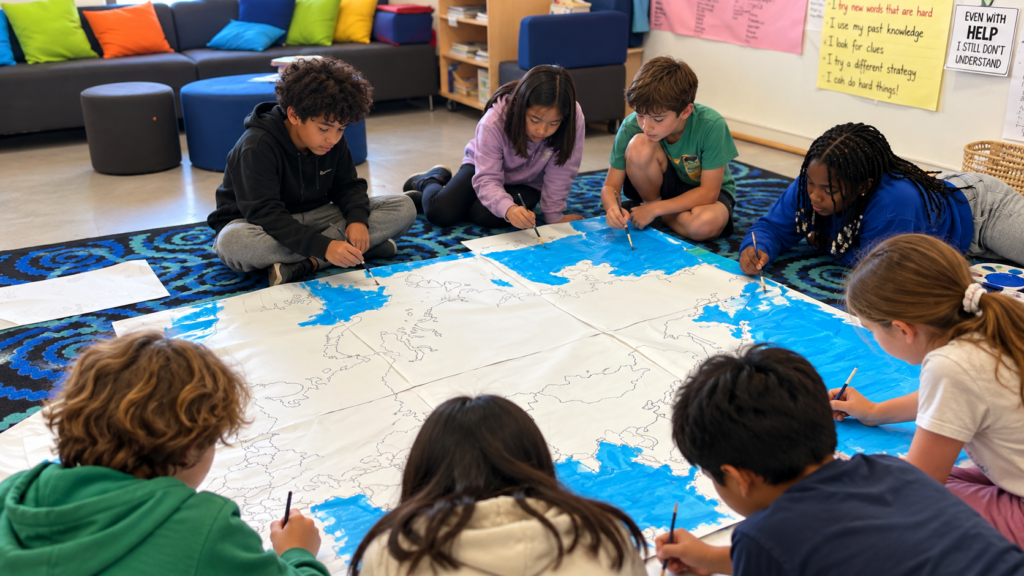
Universal Design for Learning asks us to anticipate learner variability rather than wait for students to struggle and then add support. But in multilingual schools, one form of variability is still often treated differently: language. We may design proactively for differences in attention, processing, background knowledge, access, and expression, while still assuming that learning should […]