More English Is Not Always Better Support for Multilingual Learners


Rethinking language, learning, and inclusion in schools with language diverse populations

1. The Question Many Families and Teachers Are Asking
In international and bilingual schools, multilingualism is the norm, not the exception. Students move between languages at home, with friends, and in their thinking. Still, it is understandable that parents and teachers may become concerned when learning feels harder in English.
When multilingual students struggle in an English-medium classroom, the instinct is often to give them more English support.
More English time. More intervention. More pull-out services.
These responses usually come from care. But more English exposure is not always the same thing as better access to learning.
That raises an important question:
Are we offering multilingual students more support, or the right kind of support?
2. When “More Support” Misses the Point
Extra language support can be valuable. The problem comes when support is defined primarily as more exposure to English, without asking what is actually creating the barrier to learning.
More worksheets do not necessarily create more understanding. More English does not automatically create better access to complex content. And pull-out support can become problematic when students regularly miss rich classroom learning, collaborative work, or opportunities to engage with challenging ideas.
It can also send an unintended message: that the student’s language is something to fix before they can fully participate.
Over time, that can shape how students see themselves as learners.
The more useful question is not simply:
How can we give this student more English?
It is:
What does this student need in order to understand, participate, and learn?
3. What Multilingual Students Actually Need
Multilingual learners do not need less rigor or less sophisticated thinking.
They need access.
That access can come through clear expectations, meaningful engagement with content, appropriate language development, and classrooms where students can draw strategically on their full linguistic repertoires.
This is where translanguaging becomes useful.
Translanguaging recognizes that multilingual students can draw on knowledge and linguistic resources developed across their languages to make meaning, solve problems, and learn.
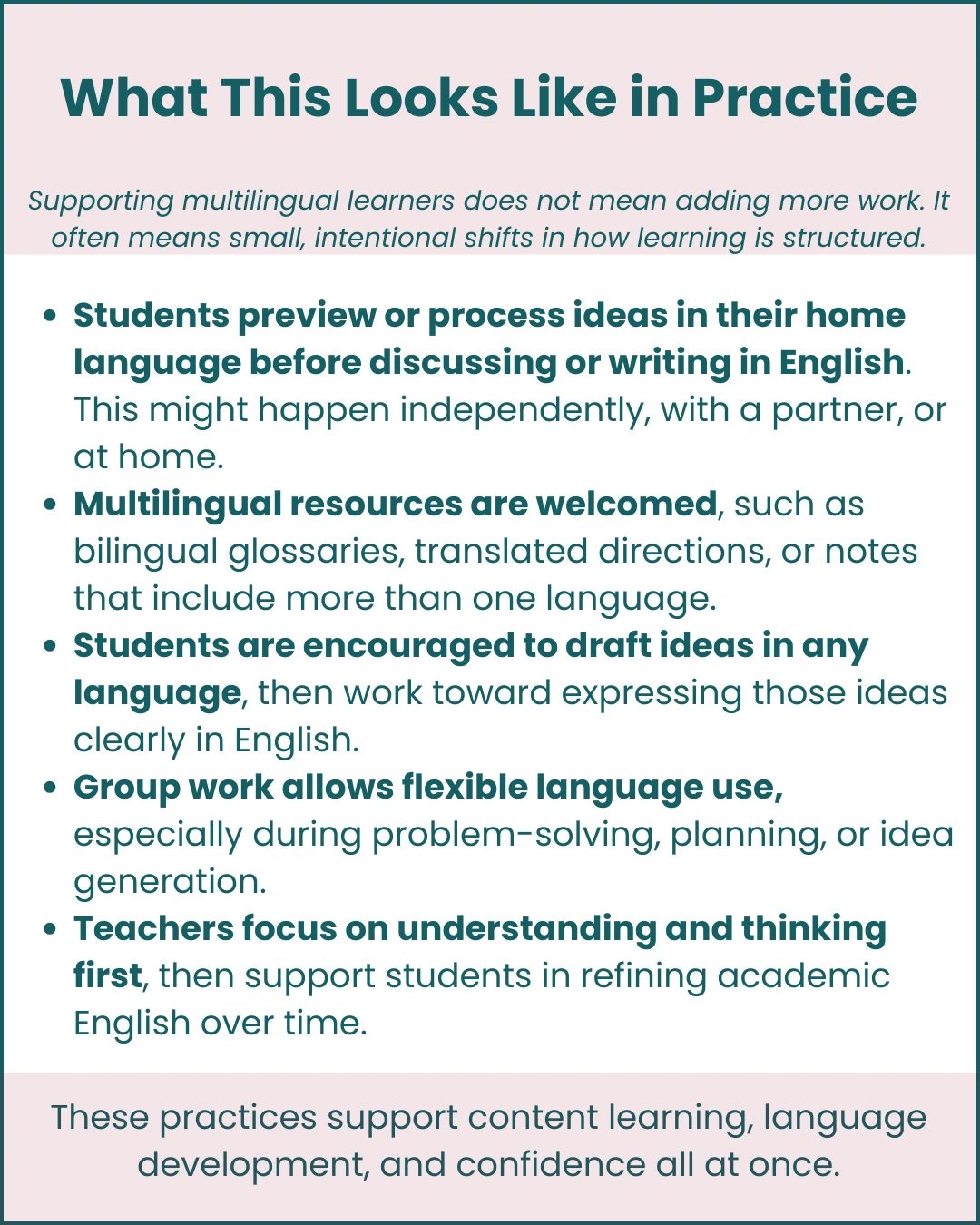
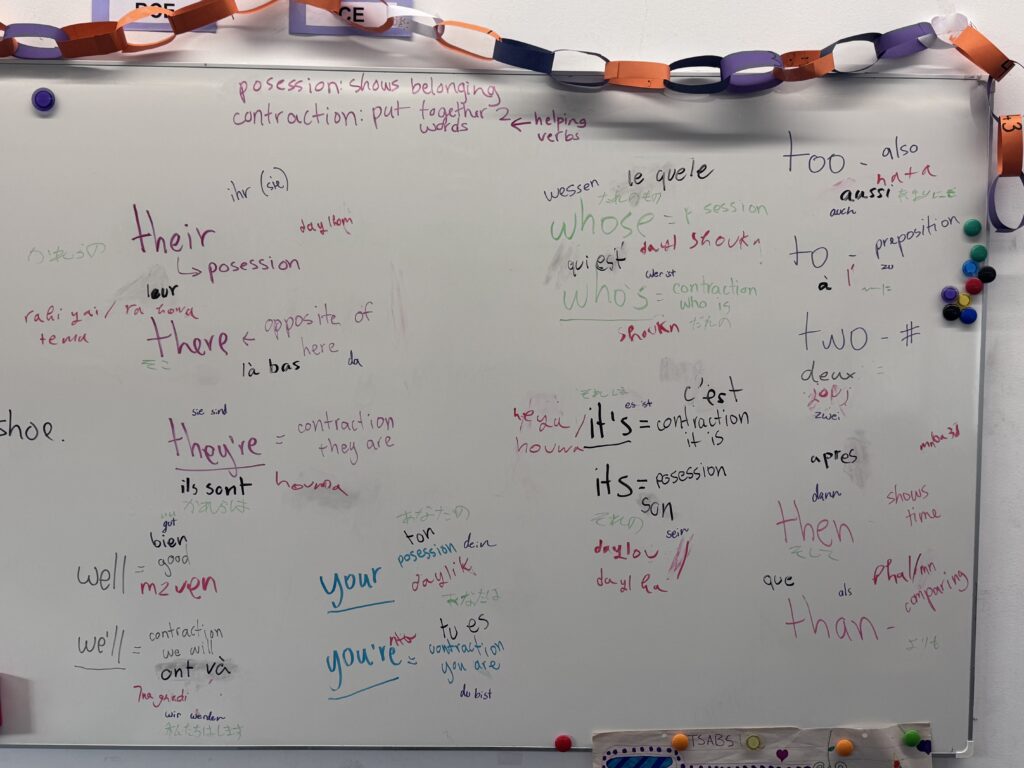
In practice, that might mean students think, process, discuss, research, annotate, or draft across languages before producing work in English.
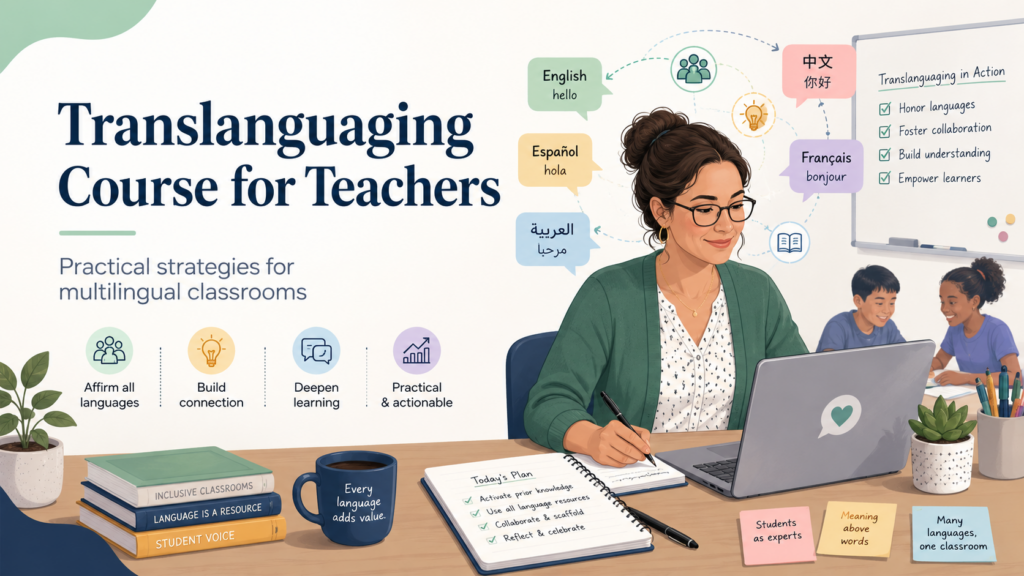
If you are wondering what that actually looks like in a classroom, I have also shared practical translanguaging examples for multilingual learners and translanguaging strategies teachers can use purposefully.
This is not about replacing English.
English development is important.
It is about making sure students can continue learning deeply while they develop it.
4. The Hidden Cost of English-Only Approaches
English-only approaches often begin with reasonable goals. Schools want consistency, clarity, and strong English development.
But there is an important distinction between creating purposeful opportunities to develop English and requiring students to do all of their learning exclusively through English.
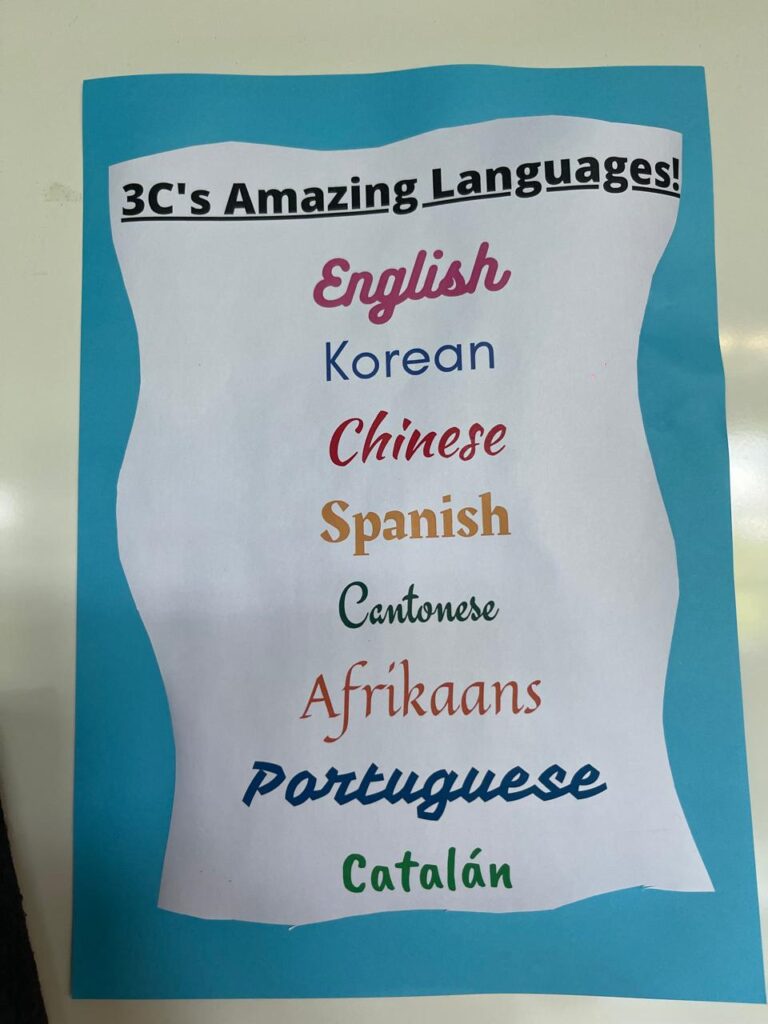
A student may understand a scientific concept in Arabic, recognize a literary pattern through French, or reason through a mathematical problem in Korean before having the English needed to express that understanding precisely.
The knowledge does not disappear because it was developed through another language.
When students are expected to set those resources aside, we may inadvertently make learning harder than it needs to be.
Students can end up demonstrating the limits of their current English rather than the limits of their thinking.
That difference is important.
English acquisition is important. But English is not the destination.
The goal is not to turn multilingual students into monolingual English speakers.
It is to help them become knowledgeable, capable multilingual people who can participate fully in learning.
5. Different Support Means Smarter Systems
This is not only a classroom issue.
Supporting multilingual learners well requires schools to think about the structures surrounding teachers and students.
What do teachers understand about multilingual learning?
What guidance do they receive about when students can use different languages?
How is English development balanced with access to rigorous content?
What messages do families hear about home-language use?
What happens across subjects, year levels, and classrooms?
When schools have a shared understanding of multilingual learning, teachers do not have to invent their own language policy every Monday morning.
Expectations become clearer.
Students experience greater consistency.
Families understand why multilingual practices are being used.
And teachers have a framework for making decisions rather than simply choosing between English-only and anything goes.
This is why I increasingly think of language inclusion as part of a school’s learning infrastructure, rather than as a separate intervention for a particular group of students.
If your school is trying to move from saying it values multilingualism to actually designing for it, you can explore how I work with multilingual schools through Conex-Us Consulting.
6. Rethinking What Support Really Means
The question is not whether multilingual students need support.
Of course they sometimes do.
The more useful question is what kind of support will help them learn.
Sometimes that will mean explicit English-language instruction.
Sometimes it will mean additional scaffolding.
Sometimes it will mean access to knowledge through another language.
Sometimes it will mean giving students time to process an idea before expressing it in English.
And sometimes the barrier is not located within the student at all.
It is located in the way the learning environment has been designed.
Supporting multilingual learners well therefore does not begin with asking:
How can we give them more English?
It begins with asking:
What is getting in the way of thinking, participation, and learning, and how can we redesign it?
When multilingualism becomes part of everyday learning rather than something managed at the edges of school, students no longer have to choose between developing English and engaging with rigorous ideas.
They can do both.
And that is a much more useful definition of support.
Keep exploring
Want practical classroom examples? Read 3 Practical Translanguaging Examples for the Classroom.
Wondering how this works when you do not speak your students’ languages? Read Translanguaging When You Don’t Speak Your Students’ Languages.
Or, if you are thinking beyond individual classrooms, explore how Conex-Us works with schools to strengthen multilingual practice across classroom, leadership, and community.


Responses