Language Inclusion Is for Every Multilingual Learner

When schools talk about language inclusion, the conversation often turns immediately to students who are still learning English.
That makes sense. Students developing proficiency in the language of instruction need intentional support to access learning and demonstrate what they know.
But language inclusion is bigger than language support.
A multilingual student does not stop being multilingual once they become fluent in English.
Their other languages still shape how they think, make connections, interpret experiences, communicate with their communities, and understand the world around them.
That means language inclusion matters for every multilingual learner, including high-achieving students who are completely proficient in the language of instruction.

Language Inclusion Can Be a Matter of Enrichment
Last year, I taught a Tunisian student who was an exceptionally strong student and completely fluent in English.
She didn’t need French to access the curriculum.
But French was still part of her learning.
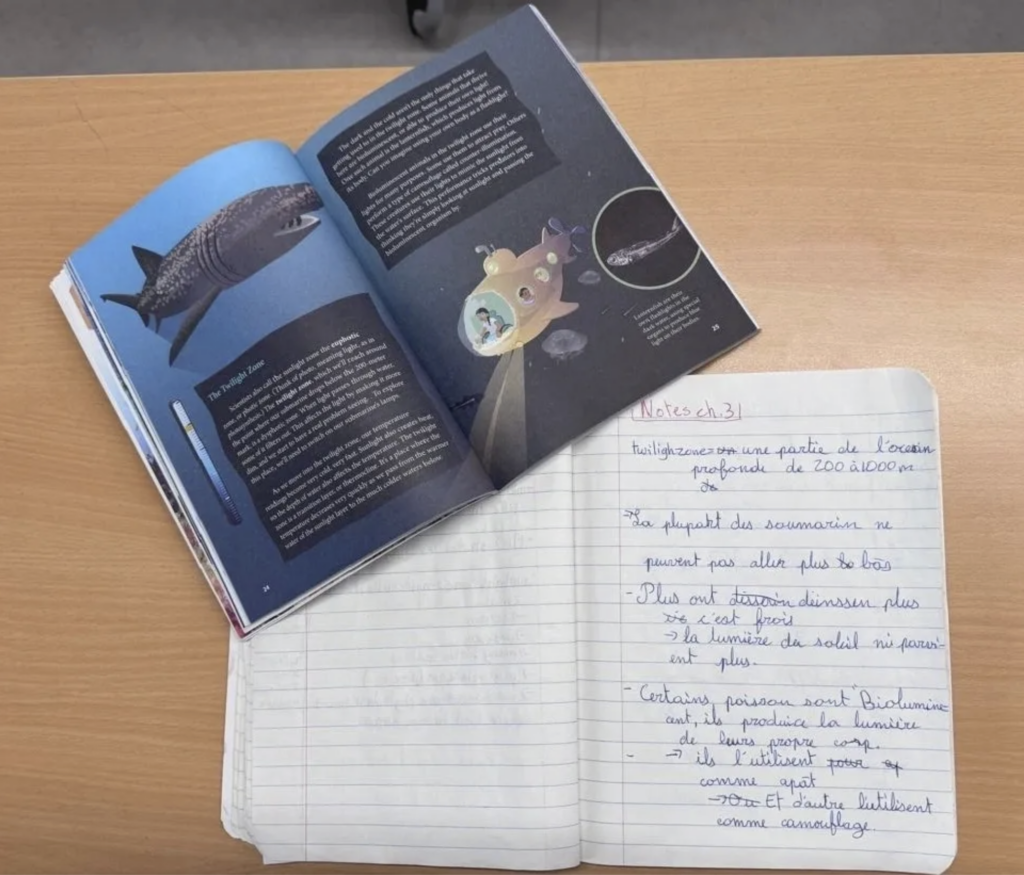
She was an avid reader, and her parents had clearly invested heavily in literacy at home. She also loved keeping a journal and regularly used writing and note-taking in French and English to process ideas.
So there was no reason for school to treat English as the only language that mattered academically.
When multilingual students read, write, take notes, or make connections across languages, they aren’t simply practicing another language. They’re drawing on a larger network of knowledge.
They may notice how an idea is expressed differently, or connect new vocabulary with something they already know. They may discover that a concept fits more naturally into one language than another.
That kind of movement across languages can encourage the cognitive flexibility multilingual learners are already developing as they navigate different linguistic systems. WIDA, for example, identifies multilingual students’ ability to process multiple languages and make connections across languages and cultures as an asset they bring to learning.
For a student like mine, language inclusion wasn’t remediation.
It was enrichment.
Language Inclusion Can Connect Learning to the Real World
I once watched two Moroccan students working together on a math problem.
I asked them to switch into Darija.
At first, they were shy about it.
Teachers didn’t usually ask them to use Darija academically. It was the language they used with friends, with family, in shops, on the street. And because Darija is primarily spoken rather than standardized as a written academic language, they weren’t accustomed to thinking of it as something that belonged in a math lesson.
But they did it.
Afterward, they told me it had been a completely different experience. They said they had to “flip something” in their brains to explain the mathematics in Darija.
And that is exactly why the exercise was important.
They weren’t simply translating English mathematical vocabulary into another language. They had to reconstruct the idea using a linguistic system they normally used for different purposes.
They had to ask themselves: How would I actually explain this idea in Darija?
That kind of change in thinking can make students examine their understanding from another angle.
And in this case, it connected academic mathematics with a language already deeply tied to real-world experiences involving numbers: buying things, discussing prices, negotiating, estimating, comparing quantities, and talking about money.
Darija hadn’t suddenly become useful because I invited it into the classroom.
It had always been useful.
The difference was that we finally treated it as a language that could support academic thinking, too.
Language Inclusion Can Be a Matter of Belonging
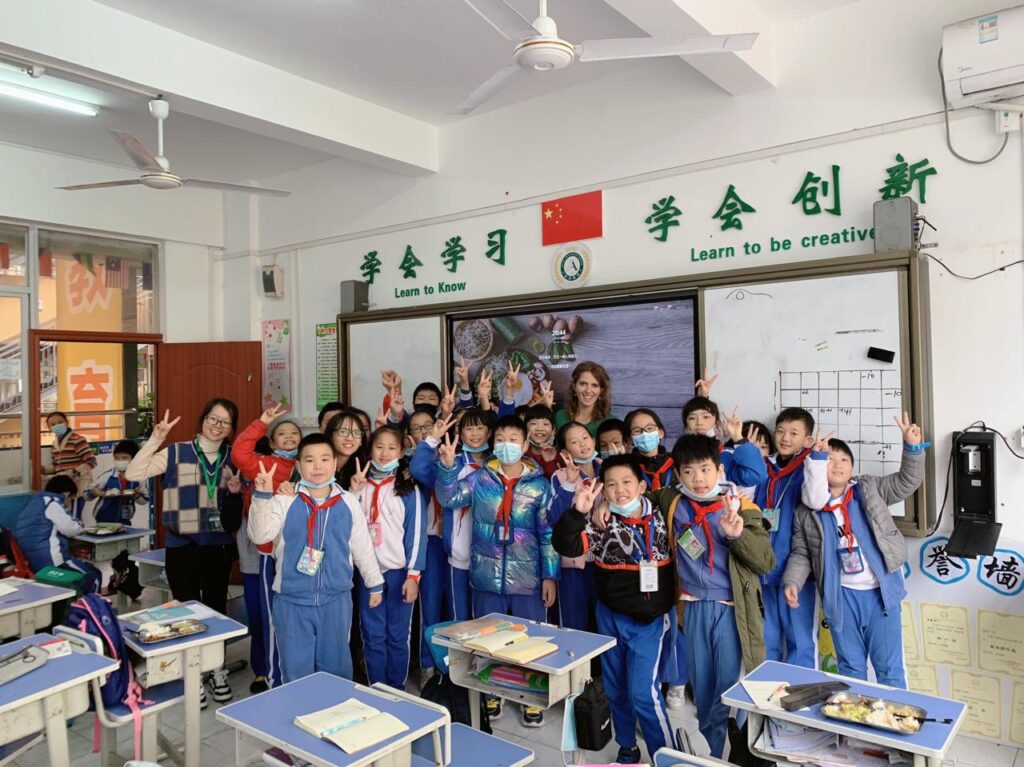
One of my Grade 5 students was academically successful in English, but reluctant to use Chinese at school.
She had previously experienced bullying connected to her Chinese identity, so keeping that part of herself less visible made sense.
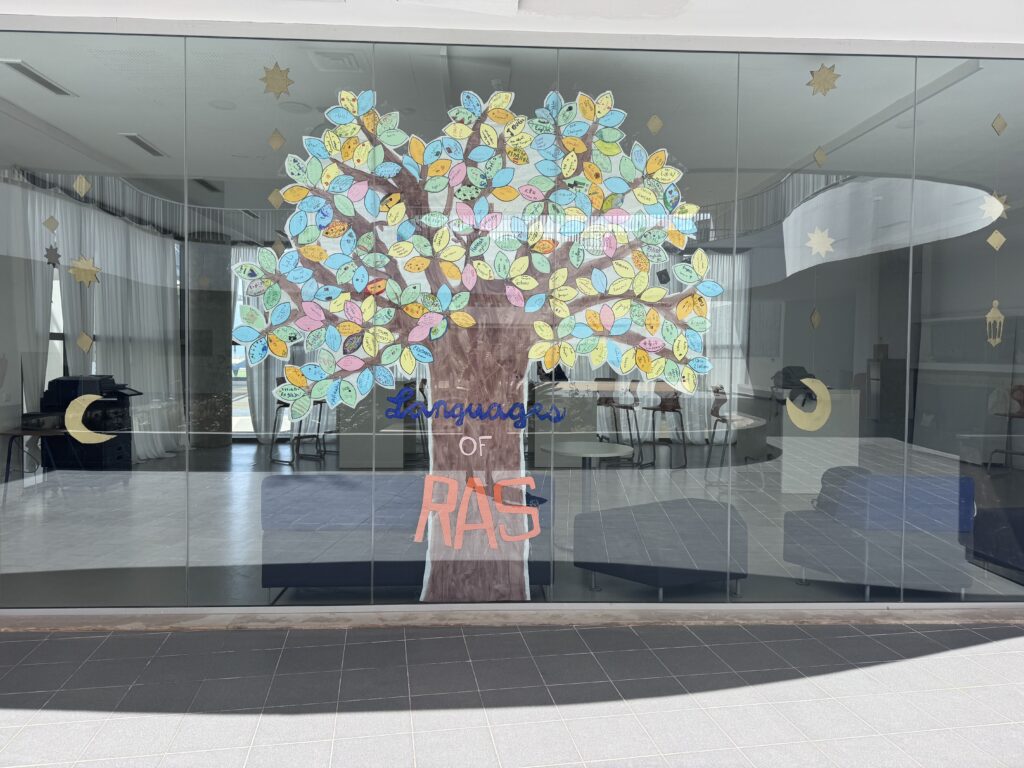
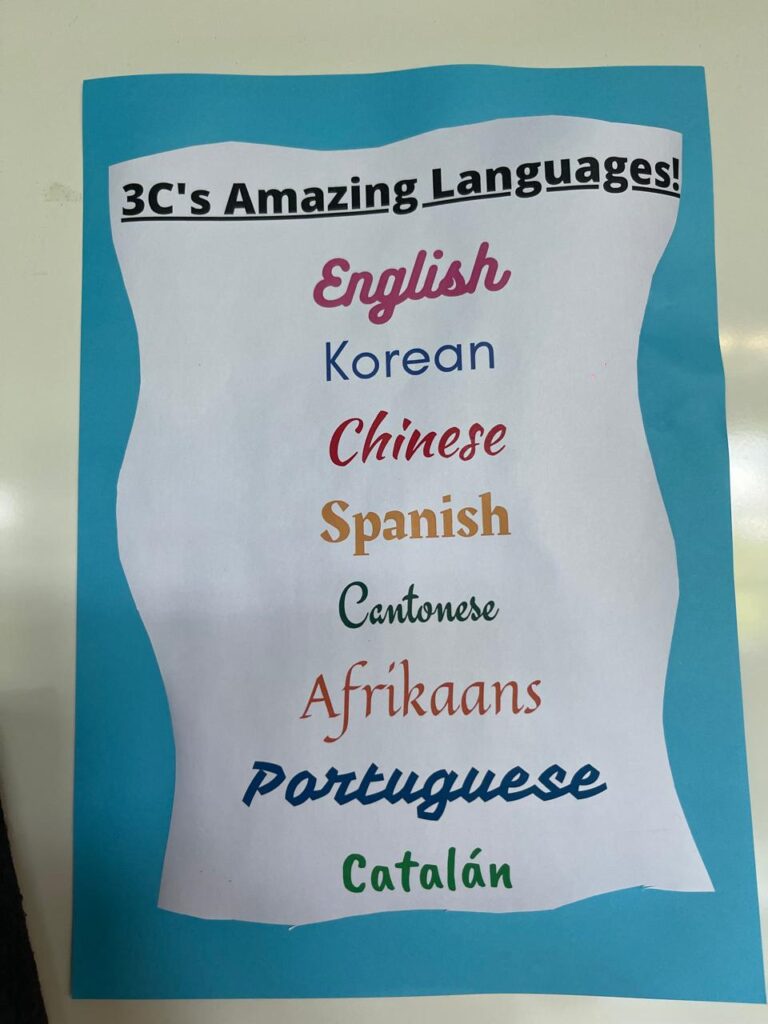
We started making Chinese more present in the classroom: on the walls, in lessons, and through family and cultural contributions.
Over time, she began using Chinese more openly and participating differently. Eventually, she took on a leadership role, sharing Chinese language and culture with younger students and the wider school community.
The important internal change wasn’t that she suddenly became more capable.
The environment made more of who she already was… more visible.
That is another side of language inclusion.
It is not only about helping students understand the curriculum. It is also about creating academic spaces where multilingual students can see their languages, and themselves, as something they are invited to contribute.
Language Support and Language Inclusion Are Not the Same Thing
This is the distinction schools need to make.
Language support may be primarily necessary for students who are still developing proficiency in the language of instruction.
Language inclusion is relevant to every multilingual learner.
One addresses an access need.
The other asks a bigger question:
Are we encouraging, or even allowing, students to use all of their linguistic and cultural resources as part of learning?
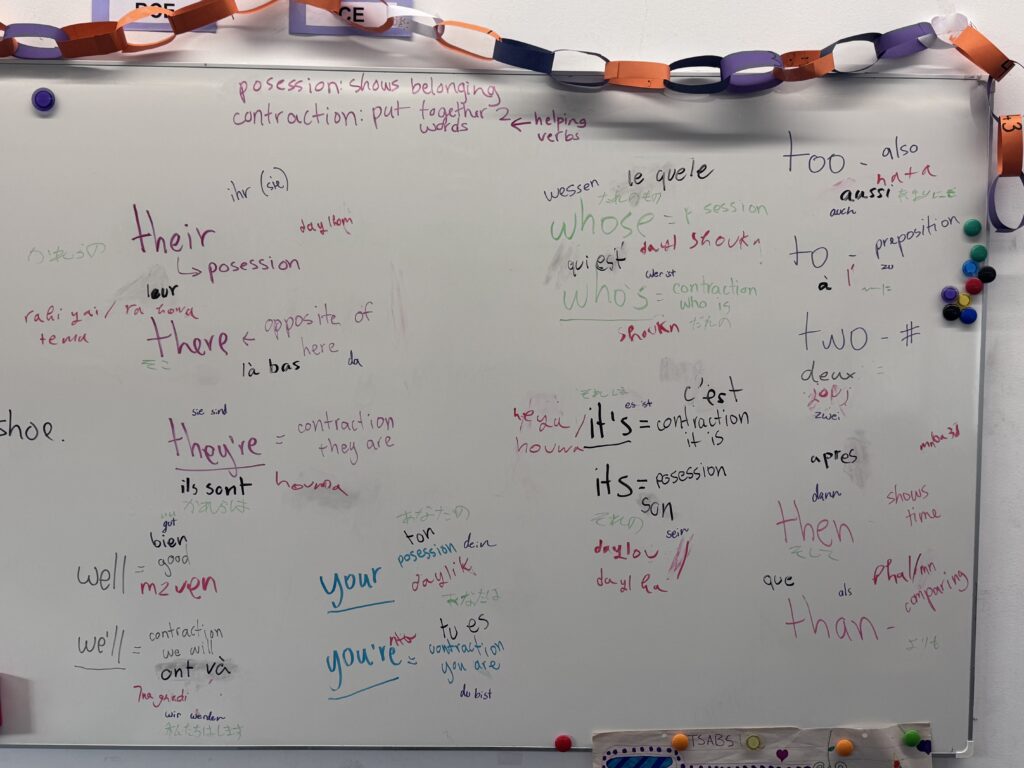
Sometimes that might look like a student brainstorming in their home language before writing in English.
Sometimes it might mean discussing a math problem with a classmate in Darija.
Sometimes it might mean keeping notes across French and English.
Sometimes it simply means hearing a teacher say, How would you explain this in your home language?
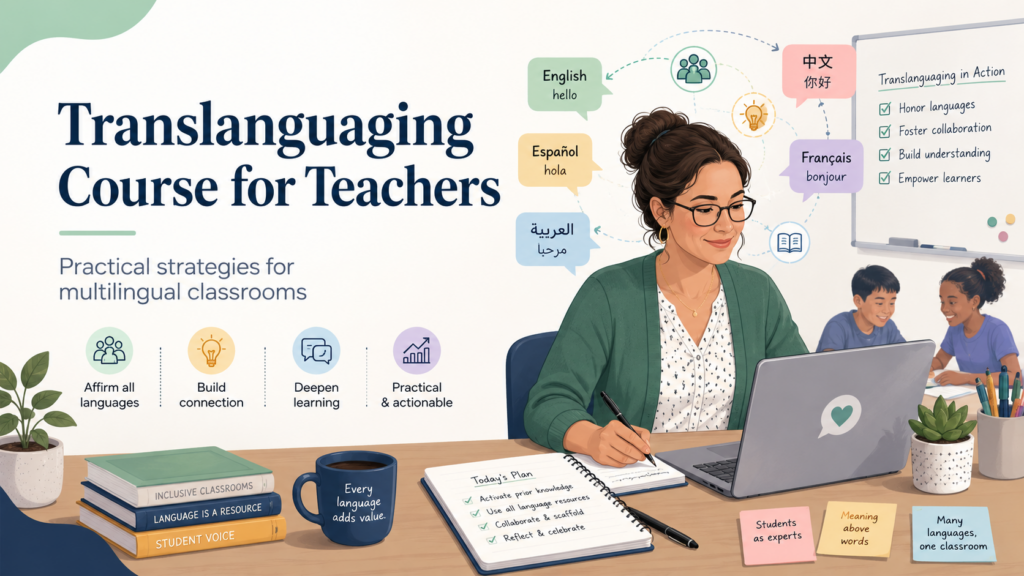
These practices are part of translanguaging: using a multilingual learner’s full linguistic repertoire to communicate, learn and make meaning.
But the larger principle is language inclusion.
Multilingualism Is Not a Problem We Solve
Too many school systems still organize language practices around a deficit question:
Who needs help with English?
That question is often necessary.
But it shouldn’t be the only one.
We can also ask:
What linguistic resources are already present in this classroom?
What do students know through those languages?
Where could those resources deepen learning, connection or belonging?
Because a multilingual student’s languages don’t become irrelevant when their English becomes fluent.
They’re still part of the student’s knowledge.
They’re still part of the student’s community.
And they’re still tools for learning.
Language inclusion begins when schools start treating them that way.
Responses