How to Use Translanguaging When You Don’t Speak Your Students’ Languages

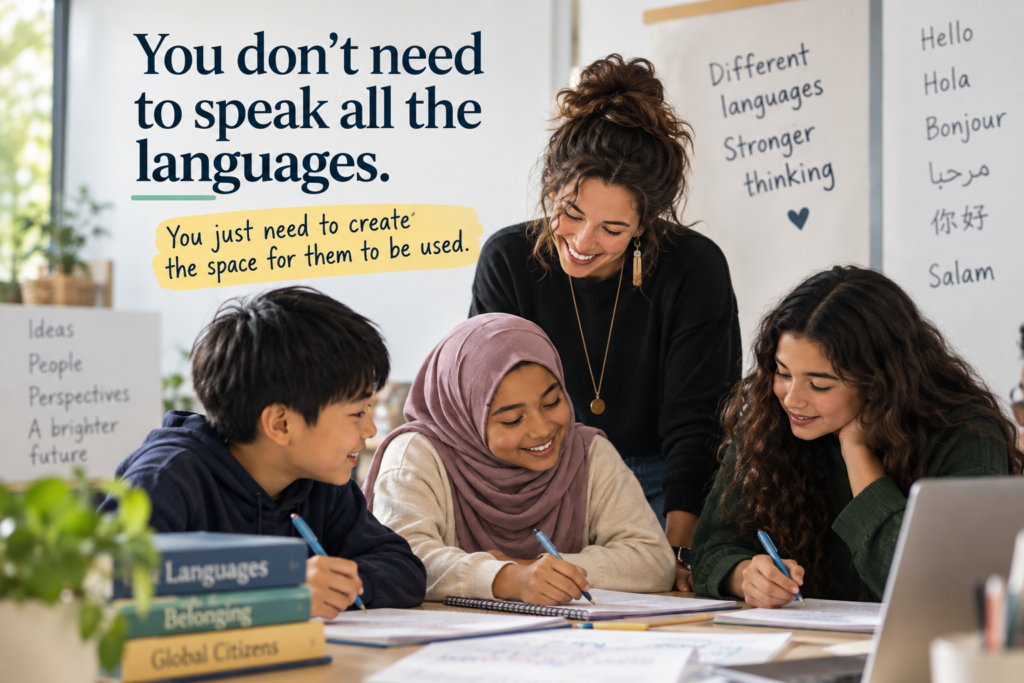
One of the most common reactions I hear when I talk about translanguaging is:
“That sounds great, but I don’t speak my students’ languages.”
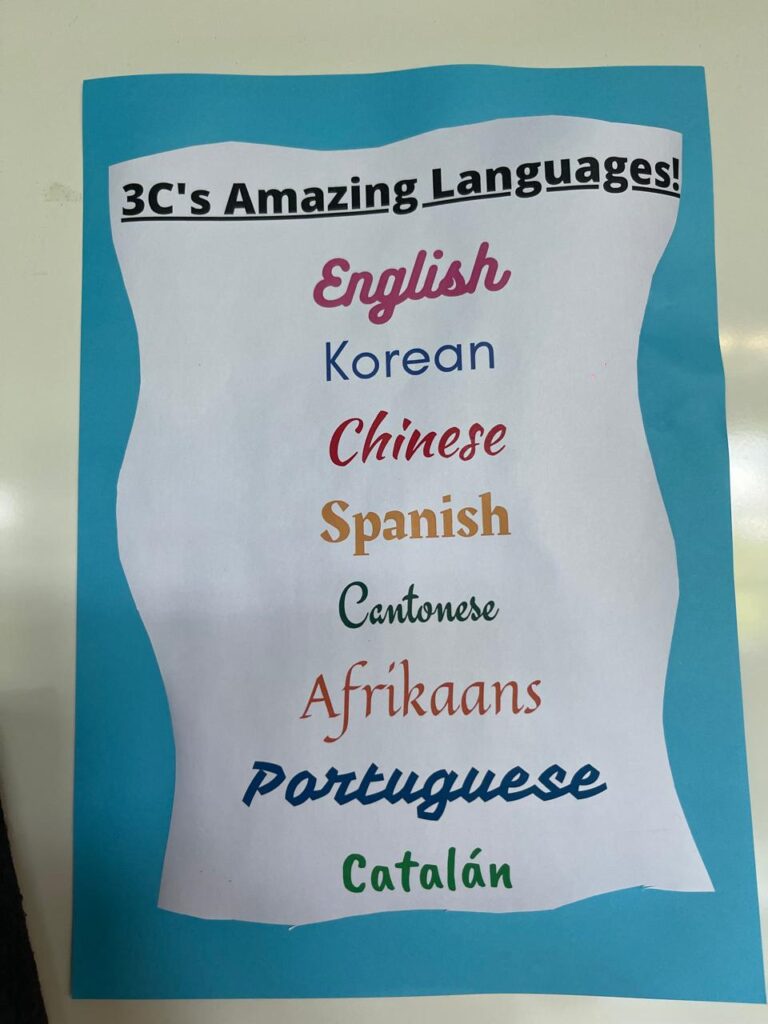
Fair. If you have Arabic, Korean, Spanish, Mandarin, French, Ukrainian, and three other languages represented in one classroom, nobody is expecting you to spend your weekend becoming conversational in all of them.
And you don’t need to.
Translanguaging is not about the teacher understanding every word students use.
It’s about creating classroom structures that allow students to use the linguistic knowledge they already have to think, process, connect, collaborate, and learn.
That distinction is important. Because if we think multilingual teaching requires the teacher to know every language in the room, language inclusion becomes an impossible ideal in most multilingual schools.
Luckily, it doesn’t.
Here are some ways you can (and should!) use translanguaging, even when you don’t speak your students’ home languages.

1. Let the Student Be the Language Expert
You do not need to know everything your students know.
In fact, one of the most productive moves a teacher can make in a multilingual classroom is becoming comfortable saying: “I don’t know. Tell me.”
If a student notices a connection between Arabic and English, ask them to explain it. If they tell you a translation does not quite capture the meaning, get curious. If they say there is no exact equivalent for a word or expression, believe that this is worth exploring.
The teacher does not lose authority by becoming a co-learner.
You still understand the learning goal. You still design the lesson. You still guide the inquiry.
But students are allowed to bring linguistic knowledge into the room that you do not have. They are going to do it anyway.
That is not a problem to solve.
It is an asset.
And there is something empowering that happens when students realize that their teacher genuinely needs their expertise.
2. Other Languages Are Not a Threat to Your Classroom
Sometimes the discomfort around languages teachers do not understand is really about control.
What if students are talking about something unrelated? What if they are making jokes? What if I can’t tell what is happening?
But students using another language does not mean you have lost control of the learning.
A multilingual classroom does not need to become linguistically transparent to the teacher at every second in order to be productive: teachers already manage plenty of things they cannot completely access.
You can’t hear every whisper in group work.
You can’t know every thought a student writes before you read it.
You can’t monitor every interaction happening simultaneously across a room.
Language is no different. The goal, then, is not to understand every word, but rather, to create clear expectations around what students should be doing, producing, discussing, or learning.
Which brings us to the third point.
3. You Can Usually Tell When Students Are Off-Task Anyway
This is the part that makes teachers laugh once they realize it.
You generally do not need to speak the language to know when a group has completely lost the plot on the assignment. 😅
You can see it, because you know what productive collaboration looks like.
You can tell whether students are looking at the text, referring to the task, writing, pointing, comparing, asking questions, or building something together.
You can also tell when the energy has shifted into weekend plans.
The language may be unfamiliar, but the behavior usually is not.
And if you are unsure, ask them to show you their thinking.
“What are you working on?”
“Show me where you are.”
“What have you figured out so far?”
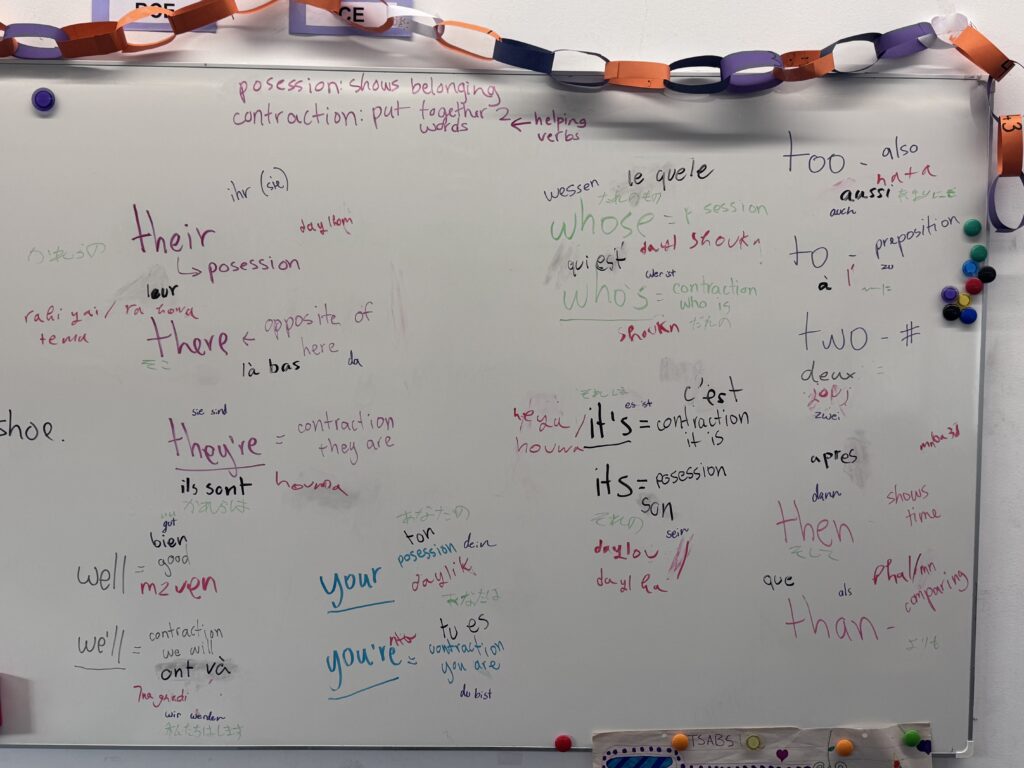
The evidence of learning does not disappear just because part of the conversation happened in a language you do not speak. If you want to see what this looks like in practice, here are 3 practical translanguaging examples for the classroom.
You Don’t Need Linguistic Control to Support Multilingual Learning
Teachers do not need to speak every language in the room.
They need to be comfortable with three things: sharing expertise, giving up some linguistic control, and focusing on evidence of learning rather than access to every word.
That can feel uncomfortable at first, especially if you are used to being able to understand everything happening in your classroom.
But multilingual learning does not require the teacher to be the linguistic gatekeeper.
Your students already bring knowledge, language, cultural experience, and ways of making meaning that you do not fully share.
That is not a weakness in the classroom; it’s part of what makes multilingual classrooms intellectually rich.
The goal is not to understand every word your students use. The goal is to know what they are learning, what they are trying to do, and what evidence will show you that the learning is happening.
Once that distinction becomes clearer, translanguaging starts to feel a lot less risky.
And a lot more possible.
If you want to see what that can look like in practice, here are 3 practical translanguaging examples for the classroom.
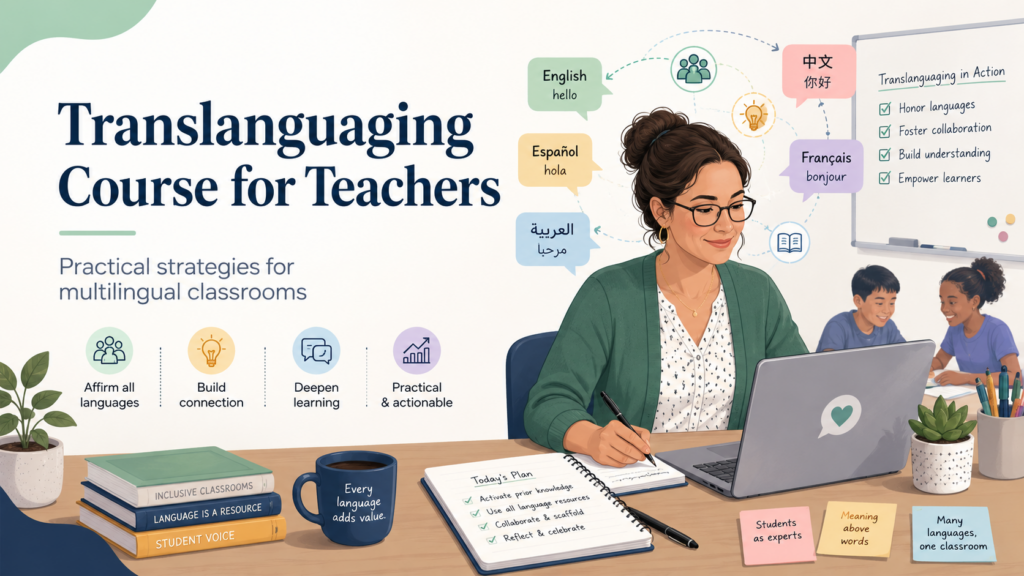
And if you want more concrete classroom ideas, I’ve put together 10 practical translanguaging examples for the classroom in a free guide.

Responses